
Hawthorne Wood Flooring has handled wood floor refinishing for more than 20 years in Hawthorne, CA, serving surrounding cities including Del Aire, Lennox, Alondra Park, Lawndale and West Athens. We bring worn, scratched, stained and discolored hardwood back to bare wood and finish it again, or restore a tired finish with a screen and recoat when the wood underneath is still sound.
Much of the hardwood in this area was laid in the houses built during the 1950s building boom, and a lot of it has spent decades under carpet or under layers of old finish. That makes refinishing one of the most cost-effective upgrades an owner can make, because the floor is already there. Our job is to decide how much of it can be saved and to take the right amount of wood off to get there.
Every refinish starts with a moisture reading and a look at the fasteners and subfloor, because sanding over a moving or damp floor locks in problems that show up weeks later. We then give you a written, itemized estimate and a cure schedule, so you know what each step costs and when every room can be used again.
Full Sanding and Refinishing
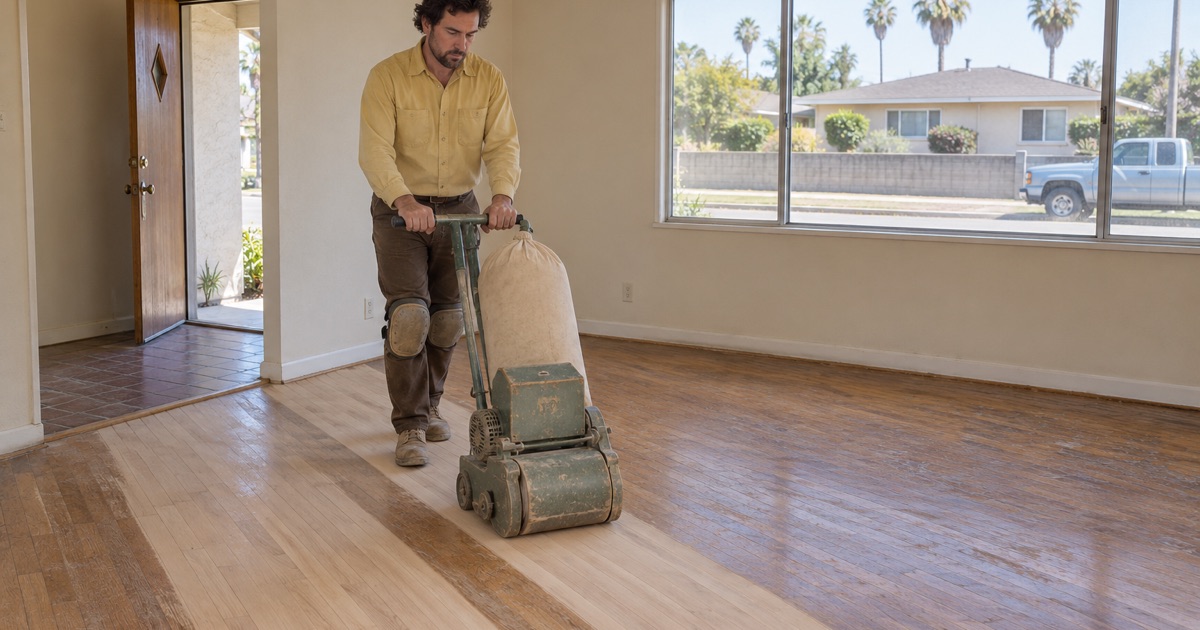
When a Floor Needs to Go to Bare Wood
A full sand is the right choice when the finish is gone in traffic lanes, when deep scratches or stains have reached the wood, or when the finish is peeling. Peeling polyurethane is usually a sign that someone recoated over wax or polish, and the only reliable fix is to remove every layer.
It is also the only way to change the color of a floor. If you want a darker stain, a lighter natural look, or to take the orange cast out of old red oak, the old finish and stain have to come off completely.
The Grit Sequence and the Right Machines
We sand in a set grit sequence, starting coarse enough to remove old finish and flatten the boards, then working finer to take out the scratches left by each earlier pass. The drum sander works the open floor, the edger reaches along the walls, and an orbital sander blends the two so no edge line shows through the stain.
Skipping a grit is the most common shortcut in hardwood floor refinishing, and it leaves swirl marks and chatter that only appear when the stain goes on. By then the only fix is to sand the floor again.
Protecting the Wear Layer You Have Left
A solid oak floor has only so much wood above the tongue, and each full sand removes some of it. We measure that thickness before starting and sand only as deep as the damage requires, rather than running the drum sander harder than the floor needs. That keeps the floor sandable for the next owner as well as for you.
Refinishing Hardwood Found Under Old Carpet
Lifting Pad, Staples and Tack Strip First
Oak that has spent forty years under carpet usually comes up with pad adhesive stuck to it, a staple every few inches and a line of tack strip nails around each room. We pull every staple and every strip, scrape the adhesive and fill the nail holes with a filler matched to the species. Sanding over any of it tears the paper and drags metal across the boards.
The tack strip line deserves special attention, because the wood beneath it has often been shaded from light and traffic for decades. We sand and blend that perimeter so it disappears under the new finish instead of showing as a pale frame around the room.
Repairs Before the First Pass
Carpet hides a floor’s history. When it comes up, we often find a patched furnace grate, a few split boards, a gap where a wall was moved, or damage from an old leak. We weave in matched boards and refasten loose ones before sanding, so the repair is sanded and finished with the rest of the floor and blends into it.
Screen and Recoat for Floors Still in Good Shape
What a Recoat Can and Cannot Fix
A screen and recoat lightly abrades the existing finish with a buffer and applies a fresh top coat. It removes dullness and fine surface scratches, and it renews protection before the finish wears through. It does not remove deep scratches, stains in the wood or discoloration, and it will not bond over wax, oil soap or acrylic polish.
Keeping Floors Fresh Between Tenants
For landlords, a recoat is the quickest way to make a rental floor look cared for at turnover. It usually takes a day plus drying time, it leaves the wood untouched for future sanding, and it can be timed to the gap between a move-out and the next move-in. We schedule to the date you give us and provide an itemized invoice for your records.
Stain Color, Finish and Sheen
Choosing a Stain That the Wood Will Take
Red oak and white oak take stain evenly, which is why they remain the most common floors in the area. Maple, birch and some softwoods absorb stain unevenly and can come out blotchy, especially in darker colors. We apply samples on your actual floor after sanding and look at them in daylight and lamplight before the first coat goes on.
Waterborne, Oil-Modified and Hardwax Oil Finishes
Waterborne polyurethane dries clear and quickly and keeps pale floors pale. Oil-modified polyurethane gives a warm amber tone that many owners like on older oak. A hardwax oil finish soaks into the wood for a natural, low-sheen look and can be spot repaired, though it needs more regular maintenance than a polyurethane.
Finishes That Meet the South Coast VOC Limit
In the South Coast air basin, wood coatings are limited to 275 grams of volatile organic compounds per liter under SCAQMD Rule 1113. That rules out many solvent products still sold in other states. Every finish we apply meets that limit, which also means a less intense odor in the house while it cures.
Living in the House While We Work
Dust Containment and a Dustless Sanding System
We connect our sanders to a dust-collecting system and seal off doorways and vents before sanding. That keeps most of the dust out of the rest of the house and out of the finish. In a house built before 1978, we also follow lead-safe practices around painted baseboards and shoe molding, which are often disturbed during edging.
A Written Cure Schedule for Every Room
Most finishes can take sock-foot traffic within a day, but furniture, rugs and pets each need longer. We leave a written schedule showing when each room can be walked on, when furniture can return and when rugs can go down, because a rug laid on a finish that has not cured can leave a permanent pattern.
- 20+ Years With Wood Floors
- Written, Itemized Estimates
- Low-VOC South Coast Finishes