Hawthorne Wood Flooring has spent more than 20 years on wood-flooring in West Athens and the surrounding part of Los Angeles County, and a large share of that work starts the same way: a family member hands over a set of keys and asks what the floors need. We come out, open things up, and give you a clear answer before anyone moves a single box.
A house that stayed with one owner for thirty or forty years tends to carry floors that were never the priority. Carpet went down over hardwood, a kitchen got a sheet of vinyl, and a back bedroom was left alone. Our job is to find out what is actually under each room and tell you which of it is worth saving.
The decisions that follow are practical ones. What should be done while the rooms are empty, what can wait a year, and how long each step takes to cure. We put all of that on paper, itemized, so the heirs, the new occupant and anyone else with a stake can read the same plan.
Houses Held for Decades, and the Hand-Off That Follows
Long ownership is the defining trait of this neighborhood’s housing. Among the 1,545 owner households in the West Athens census-designated place, 44.2 percent moved in during 1989 or earlier. That is a lot of houses where the floors have seen one family, one set of furniture placements and one long run of daily wear, with very little changing underneath.
Who Owns These Houses Now
The owners themselves are long-settled as well. Some 38.1 percent of owner households are headed by someone 65 or older, and 29.0 percent carry no mortgage at all. When a paid-off house like that does pass to the next generation, the transfer is often the first time in decades anyone looks hard at the floors.
The stock itself is overwhelmingly single-family. About 95.7 percent of owner households live in detached houses, so the typical job here is a whole house with a living room, hall and two or three bedrooms, not a single condo room. That scale matters when you are planning around a deadline, because several rooms in sequence take longer than one.
The One-Year Window Under Proposition 19
When a parent’s home passes to a child, the timing is shaped by a rule the Los Angeles County Assessor administers. Under Proposition 19, for transfers from February 16, 2021, the child keeps the parent’s taxable value on a family home only if the child makes it their principal residence and has a Homeowners’ Exemption filed within one year of the transfer. The Assessor’s claim form for the parent-child exclusion is BOE-19-P.
We are floor people, not tax advisors, and we do not tell anyone whether an exclusion applies to them. Questions about eligibility, value tests or filing belong with the Assessor’s office or your own advisor. What we can tell you is that a one-year move-in window is a real deadline for many families, and floor work that is planned early rarely becomes the thing that holds it up.
Looking for wood-flooring closer to Gardena? See Gardena Wood-Flooring.
Reading Floors That Have Not Changed in Years
The 1950s were the peak building decade here, with 32.6 percent of the area’s housing units dating to that span. Houses from that era, and from the forties and sixties on either side of it, vary more than people expect, so we never assume what a particular house has. We check, room by room, before we price anything.
Lifting the Carpet and Reading What Is Beneath
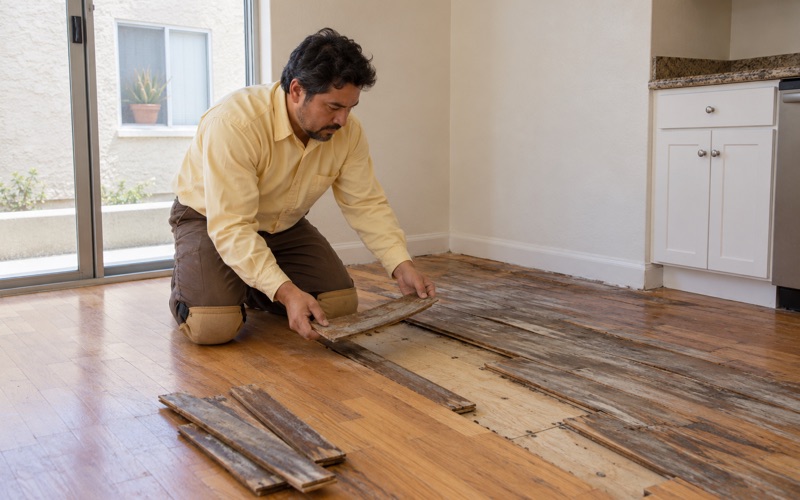
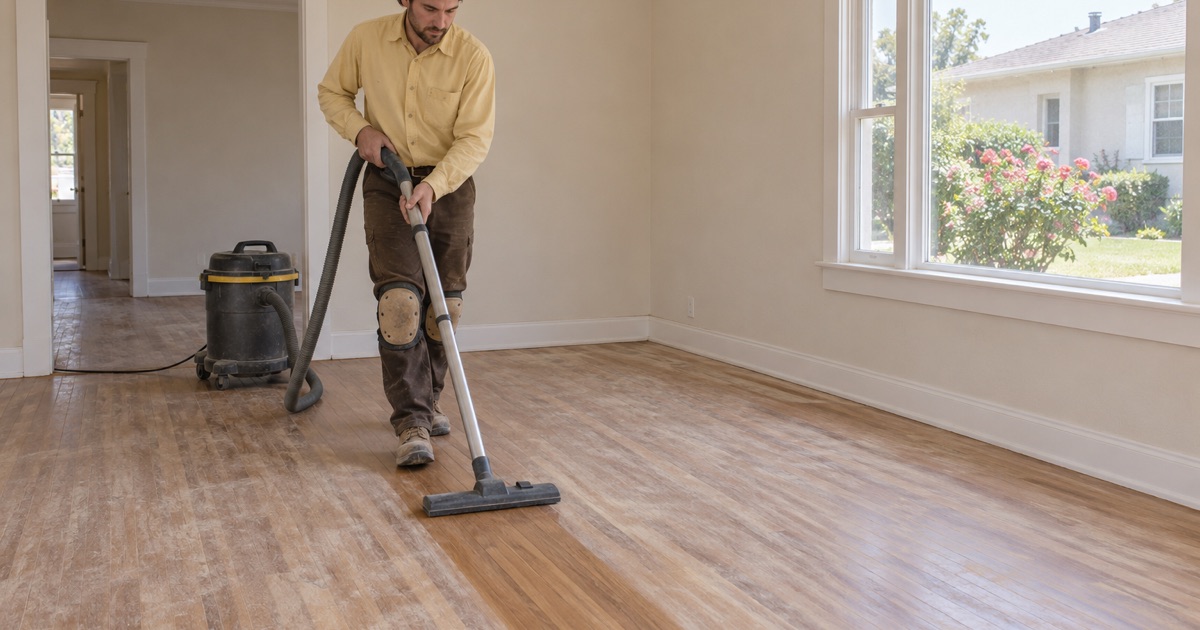
Wall-to-wall carpet laid in the seventies or eighties is common in homes that stayed in one family. When we pull it, we also remove the carpet pad, the pad adhesive, the flooring staples and the carpet tack strip, then fill the nail holes the strip leaves behind. Whatever wood turns up gets judged after that cleanup, because a floor that looks ruined under old pad often sands out well.
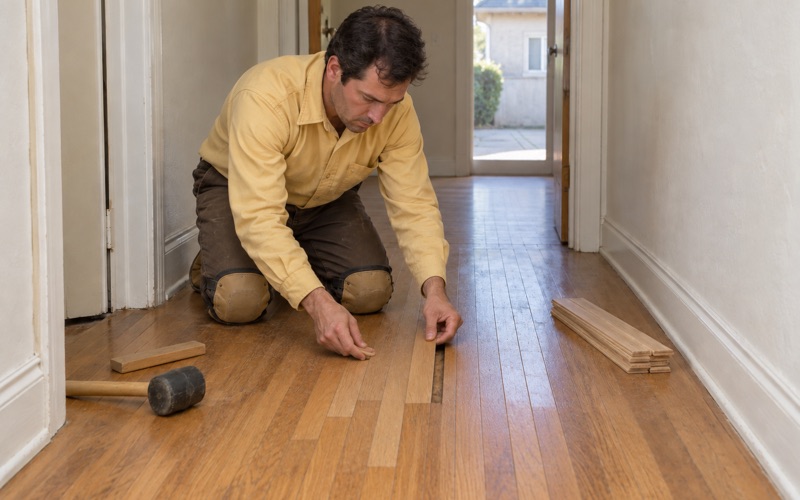
We look for the problems long ownership hides: pet urine stains that have gone black in the grain, board gaps from decades of seasonal movement, cupping near an old leak, and the orange color change that aged oil-based finishes take on. Each one has a different answer, from board replacement and weave-in repair to a full sanding, and we tell you which applies.
Checking the Structure Under the Boards
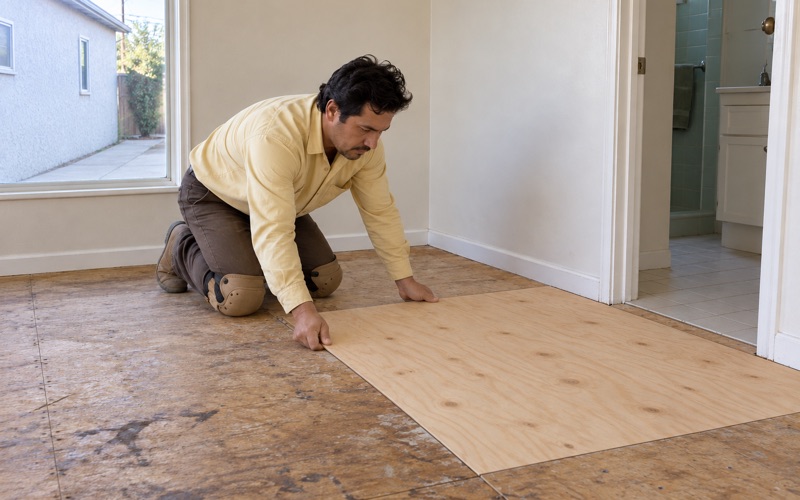
We open and check the subfloor before any finish floor is priced. Squeaks, soft spots, sloping floors, water-swollen sheathing and loose floor joists are far cheaper to deal with while the house is empty than after furniture and a family are in it. We also look for drywood termite damage, termite frass and kick-out holes, which a long-quiet house can hide for years.
Moisture gets measured with a wood moisture meter before we order any material, and if a room sits on concrete we test the slab too, using a calcium chloride moisture test or an ASTM F2170 in-situ relative humidity test. The readings go into your file in writing, so the decision to refinish, repair or replace rests on numbers rather than guesswork.
Older Materials That Need Care First
With 74.2 percent of the area’s units built before 1980, pre-1978 housing is the norm, and we follow EPA Renovation, Repair and Painting rule practices wherever painted trim, shoe molding or baseboards get disturbed. Old 9x9 floor tile and black mastic in a kitchen or hall are treated as a possible asbestos question, and we stop before sanding or scraping until an asbestos survey settles it.
Floor Work Before You Move In
An empty house is the easiest one to work in. There is no furniture to shuttle between rooms, no one needing a path to the kitchen, and no bedroom that has to be usable by nightfall. If you are taking over a family home, the stretch between the transfer and moving day is usually the best time you will ever have to deal with its floors.
Refinish, Repair or Replace
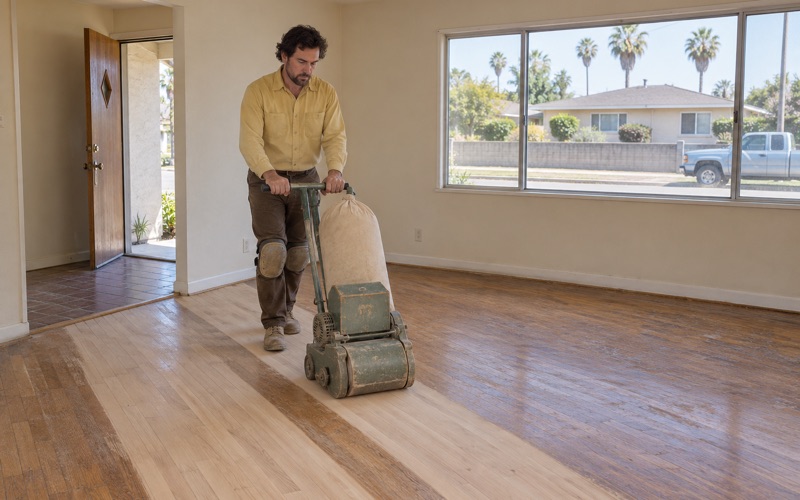
Most decades-old hardwood that is structurally sound can be sanded and refinished, provided the boards have enough wood left above the tongue. We sand with a drum sander and edger through a proper grit sequence, and a dustless sanding system keeps the fine dust down in rooms you will soon be living in. Floors that are too thin, too damaged or mismatched after old repairs are candidates for new material instead.
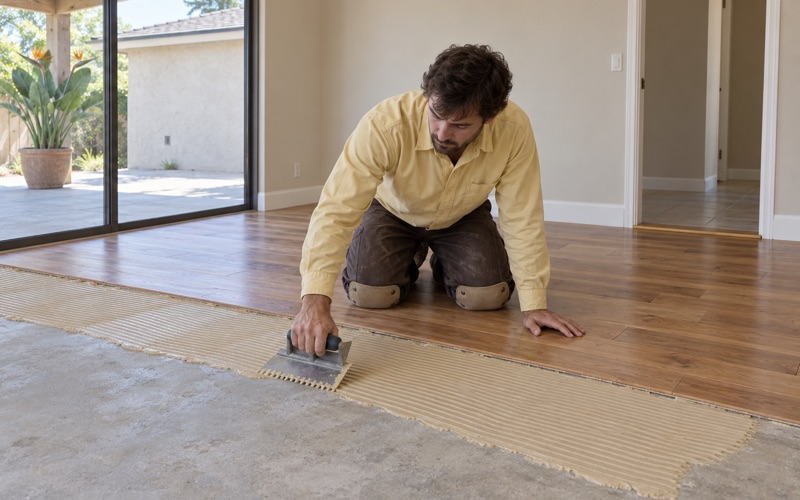
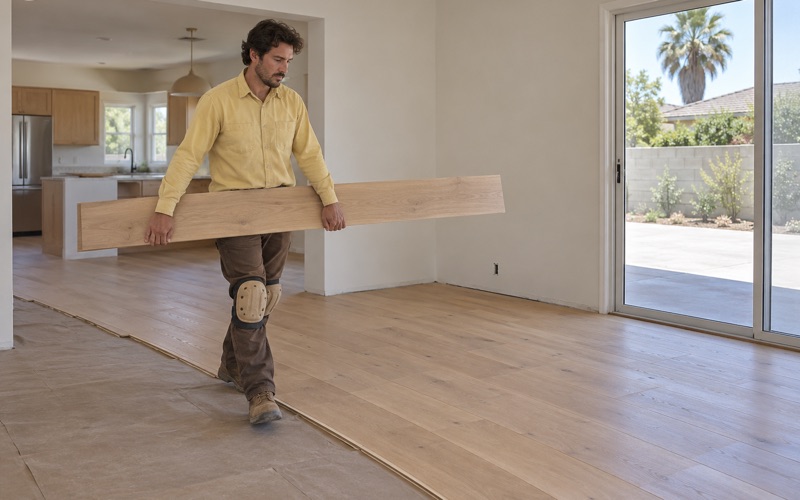
When replacement makes sense, we walk you through the options by use, not by trend. Solid red oak or white oak matches the character of a mid-century house, while engineered flooring with a good wear layer thickness suits rooms over concrete. We explain Janka hardness ratings where a household with dogs or heavy traffic needs a harder species like hickory or maple.
Rooms Worth Doing While the House Is Empty
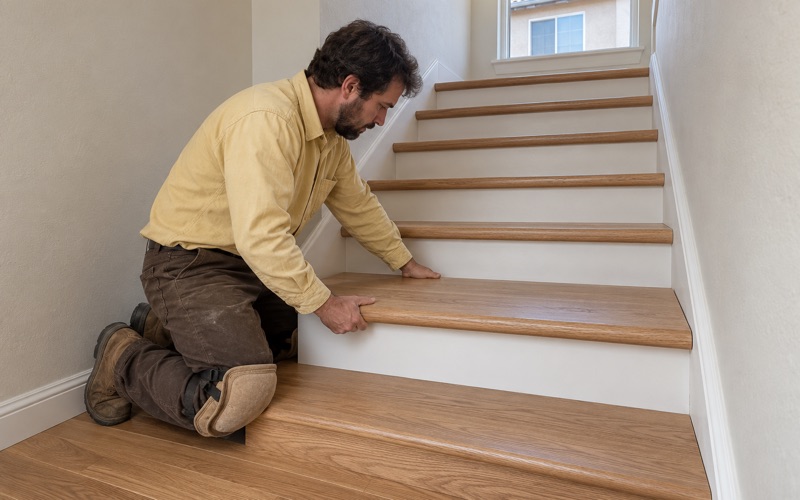
Some work is simply easier before you arrive. Hallways and bedrooms that connect to each other should be sanded and finished together so the color stays consistent. Stairs, priced per tread and riser rather than buried in a square-foot number, are much simpler to close off in an empty house, and new stair nosing can be fitted without anyone needing to get past.
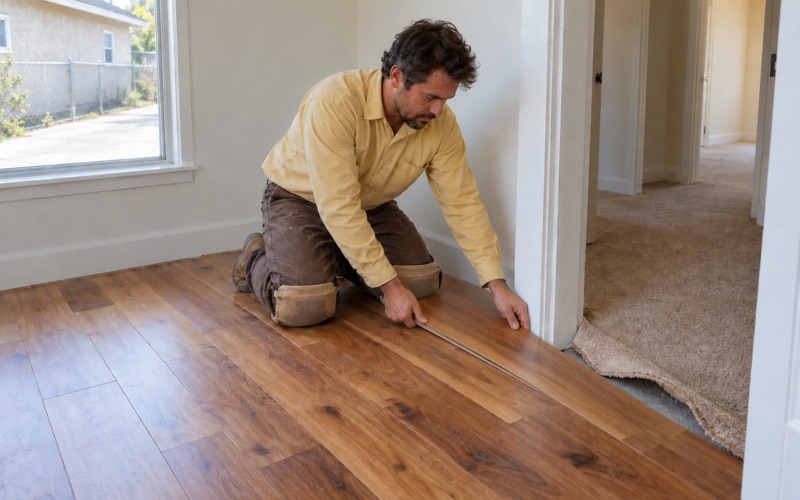
We also suggest settling transitions now. Reducer strips at a tiled kitchen, T-molding at a doorway and fresh shoe molding along the walls finish the job cleanly, and they are awkward to add once rugs and furniture are placed. Anything you would rather defer, we list separately on the estimate so the decision is yours and visible.
Keeping the Work on Schedule Without Rushing the Finish
A move-in date is the right thing to plan around, but the finish is the one part of the job that cannot be hurried. Coatings need their full cure time before furniture, rugs and daily use go on them. We build the schedule backward from the day you want to move in, with that cure time already inside it.
A Written Schedule You Can Plan Around
Every job gets a written cure schedule showing when each room can be walked on in socks, when furniture can return, and when rugs can go down. If new boards are going in, the plan also allows for acclimation, since flooring laid before it reaches the right moisture content for the house tends to gap or cup later. Knowing those dates up front lets you book movers with confidence.
We coordinate the order of rooms so the house is never fully shut down unless you want it to be. Bedrooms can be finished first if someone needs to sleep there early, or the whole main floor can be done in one pass if the house will stay empty. Either way, the dates are written down and kept.
Finish Choices That Suit a Tight Timeline
Waterborne polyurethane dries and cures faster than oil-modified polyurethane and stays clearer in color, which is why it often fits a move-in deadline best. Oil-modified finishes give the warmer amber look many mid-century floors originally had, but they take longer to cure. A hardwax oil finish is easier to spot-repair later, and we explain the sheen level options before anything is applied.
Every finish we use is legal to apply in the South Coast air basin under SCAQMD Rule 1113 and its 275 g/L wood-coating VOC limit, so the product choice never becomes a late compliance problem. If a floor already has a sound finish and only light wear, a screen and recoat can freshen it in a day or two, which helps when the calendar is tight.
When the Deadline Is Close
If the transfer happened months ago and move-in is approaching, tell us the date on the first call. We will say plainly what can be done well in the time left and what should wait until after you are settled. A floor refinished properly next spring is better than one rushed now, and we would rather split the work than hand over a finish that fails.
- 20+ Years With Wood Floors
- Written, Itemized Estimates
- Low-VOC South Coast Finishes