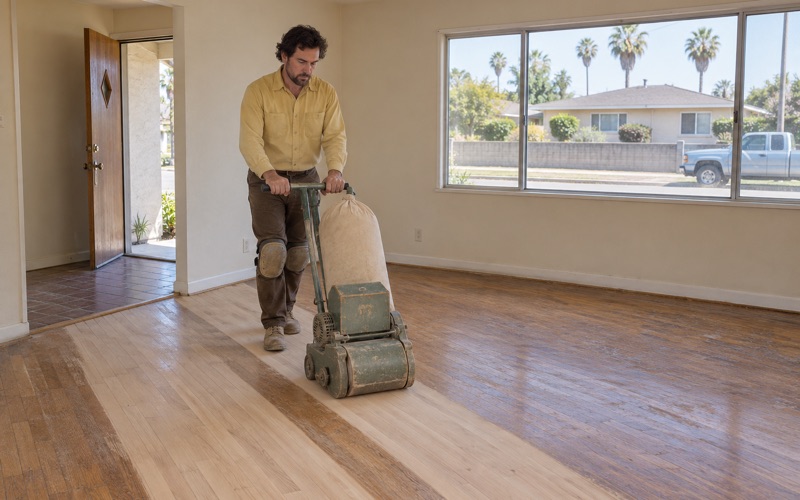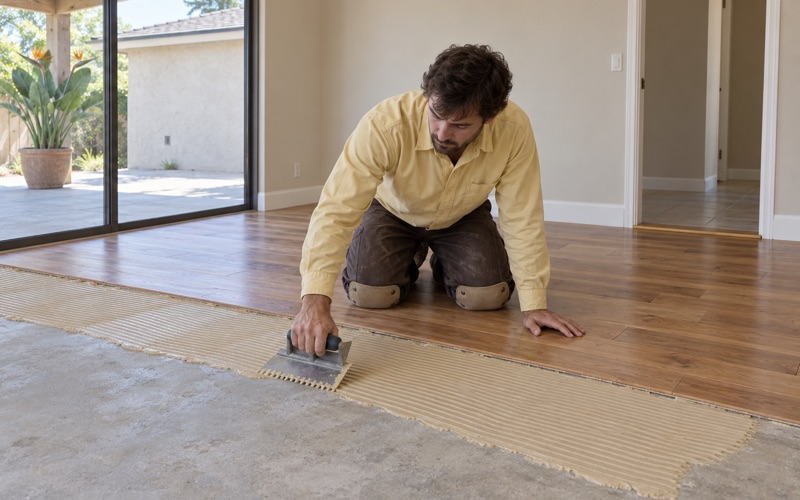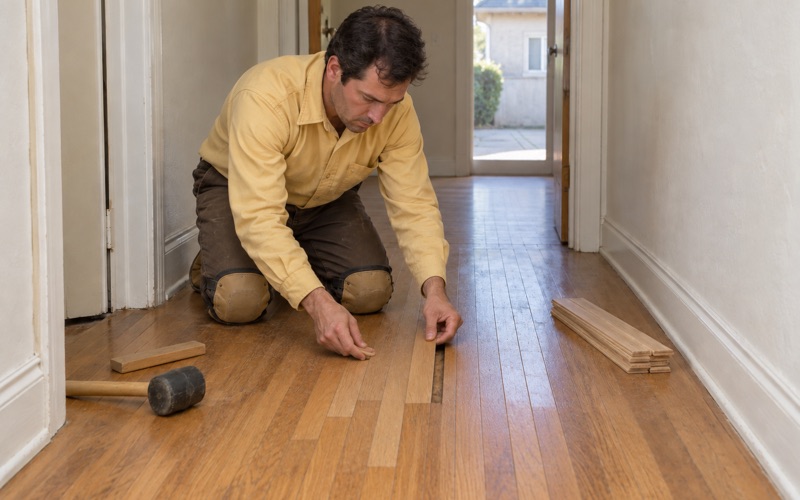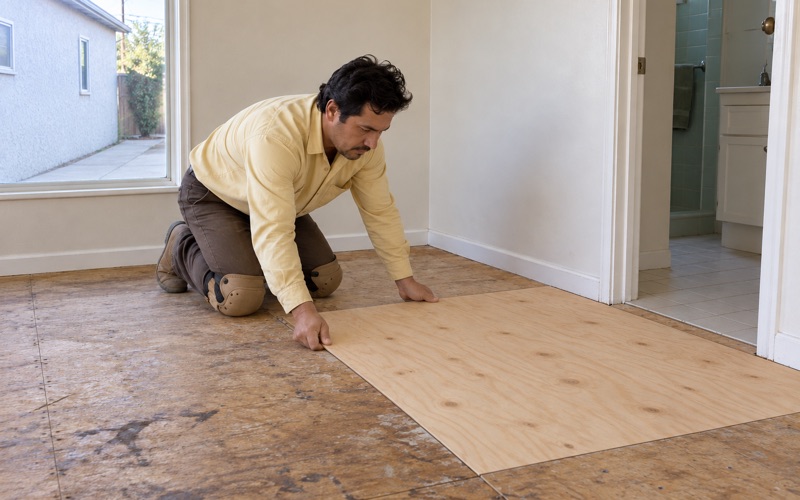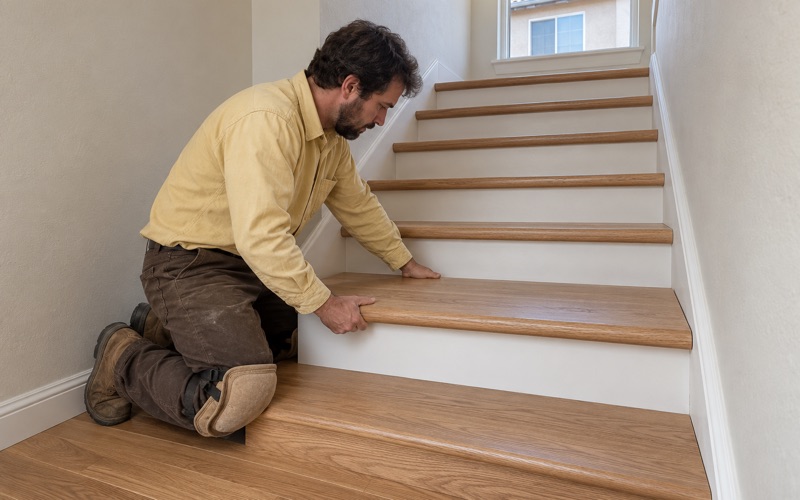
Hawthorne Wood Flooring brings more than 20 years of wood flooring work to View Park-Windsor Hills, most of it refinishing and repairing floors that have already outlasted several owners. We sand, stain and recoat worn hardwood, replace damaged boards with weave-in repairs, and install new floors where an old one cannot be saved. Every job starts with a look underneath before a price is written.
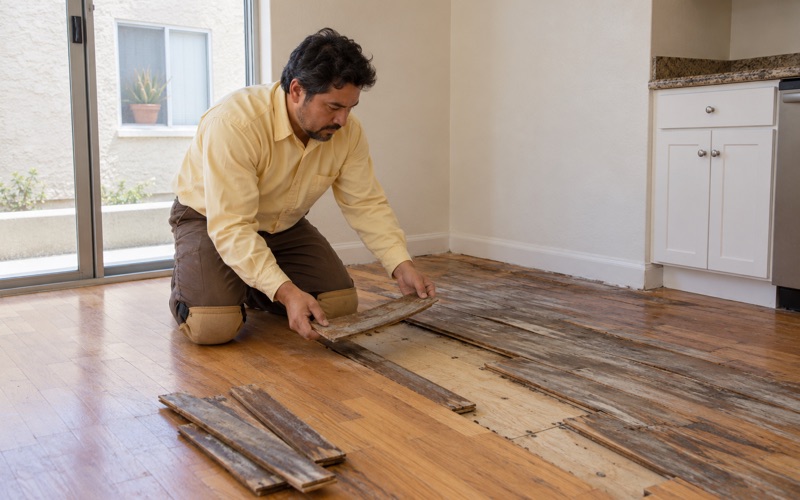
That look matters in older houses. We lift old carpet pad, staples and tack strip and fill the holes before a drum sander touches the boards, and we open and check the subfloor so a soft spot or a loose floor joist shows up in the estimate instead of as a callback weeks after the finish cures.
Nearly every home here was built long before 1978, so lead-safe work practices are our default rather than an add-on. Much of the neighborhood also sits inside a historic district listed in the National Register, and owners often ask what that listing means for floor work. The sections below answer that, then walk through how the work differs from house to house.
What the 2016 National Register Listing Means for Floor Work
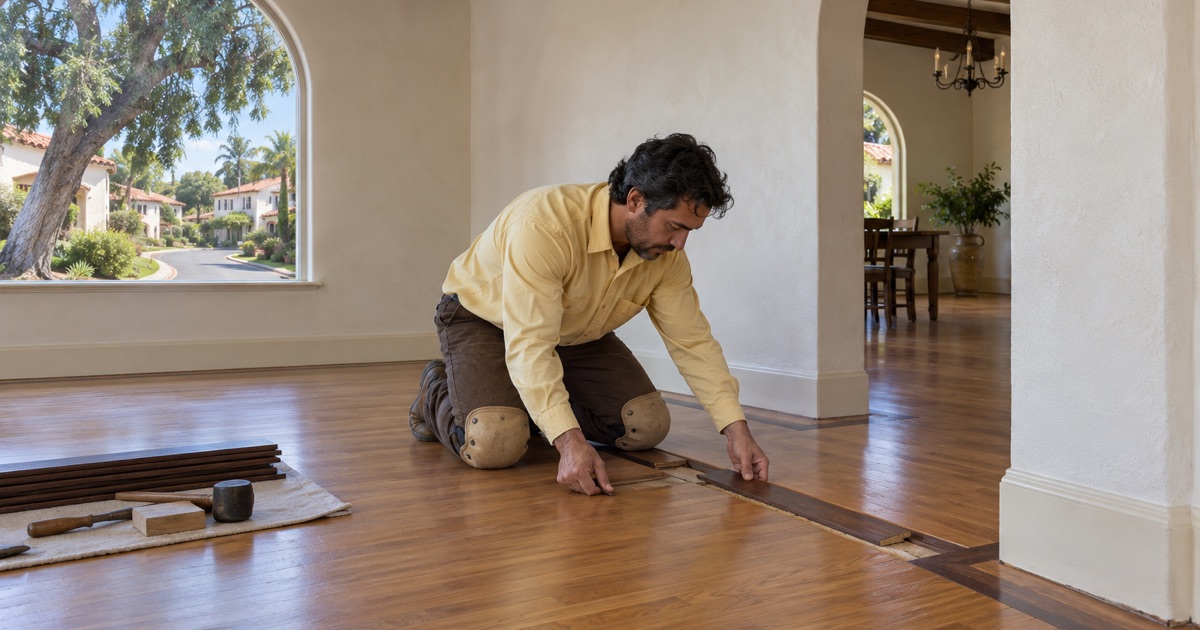
The View Park Historic District was placed in the National Register of Historic Places on July 12, 2016. The state’s historic preservation office told the Los Angeles County Board of Supervisors so in a letter dated August 22, 2016, which also noted that being placed in the National Register lists the district in the California Register of Historical Resources as well.
What the State’s Letter Says About Maintenance
The sentence owners want is short: “There are no restrictions placed upon a private property owner with regard to normal use, maintenance, or sale of a property listed in the National Register.” Listing records a place’s significance. By the letter’s plain wording, it does not put a reviewer between an owner and the ordinary upkeep of a house.
The same letter adds that a project which may cause substantial adverse changes in the significance of a registered property may require compliance with local ordinances or the California Environmental Quality Act. We quote both sentences to owners as written. We have not read anything beyond that letter on the question, so for a larger project the county is the place to ask, and we say so.
Contributors and Non-Contributors
The draft nomination counts 1,789 properties in the district, of which 1,479 are contributors and 310 are not. A contributing house is one the nomination counts toward the district’s significance. For a floor job the practical effect is modest: we treat the existing boards as something worth keeping, and we lean toward repair and refinishing over tearing a floor out.
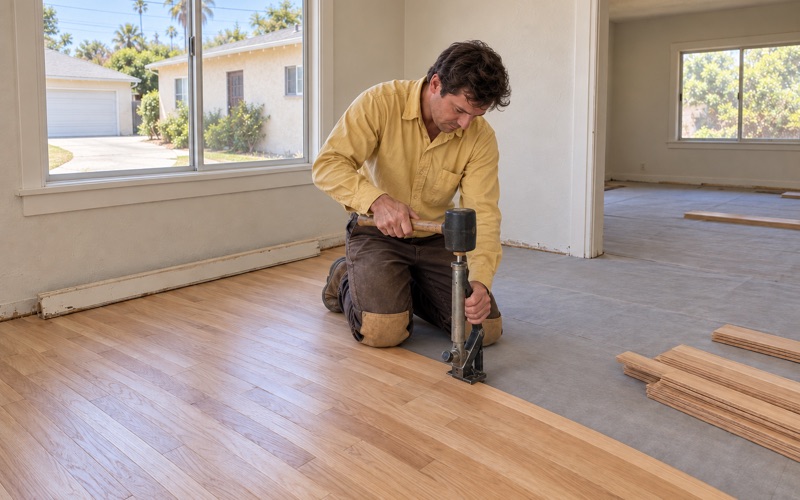
That lean is not a rule anyone handed us. It is simply what the floors in a house of this age usually deserve. Solid hardwood can be sanded several times over its life, and a board that has cupped or split can often be replaced with matching stock woven into the field, so the repair disappears once the whole room is finished.
Looking for wood-flooring closer to Ladera Heights? See Wood-Flooring in Ladera Heights.
Presidio Drive and the District’s Two Building Eras
The Los Angeles Investment Company, the same developer behind Hancock Park, subdivided the roughly 450-acre View Park development beginning in 1923. Subdivision continued for two decades, and houses went up incrementally from the mid-1920s into the 1960s, which the nomination calls an unusually long, approximately forty-year building period. That spread is why two floors a few blocks apart rarely behave alike.
Houses were designed by many architects and builders working to loose guidelines enforced by an architectural review board. Named architects on the nomination include Paul Haynes, Raphael Soriano, Robert Earl and Theodore Pletsch. The nomination also records that racially restrictive covenants kept the neighborhood white through the 1950s, and that by 1970 it was 75% African American, a history at the center of the district’s significance.
East of Presidio Drive: Prewar Period Revival Houses
According to the nomination, the part of View Park developed before World War II lies east of Presidio Drive, and its houses are predominantly Period Revival, with Spanish Colonial Revival, Tudor Revival, American Colonial Revival and French Renaissance among the styles listed. Across the whole census area, 1,468 of 4,928 housing units date to 1939 or earlier.
In houses this old we expect a floor that has been refinished before, sometimes more than once, and we check how much wood is left above the tongue before planning a sanding. Old finishes can hide wax, shellac or a patchwork of earlier repairs. We test a small area first, because a finish that gums up the paper changes the grit sequence and the time the job takes.
West of Presidio Drive: Postwar Ranch Houses
West of Presidio Drive the district turns postwar, predominantly Ranch styles the nomination names as Oriental, Traditional and Contemporary Ranch, with Minimal Traditional houses scattered throughout. The 1940s were the largest building decade across the census area, at 32.4 percent of housing units, and 85.4 percent of units were built before 1960.
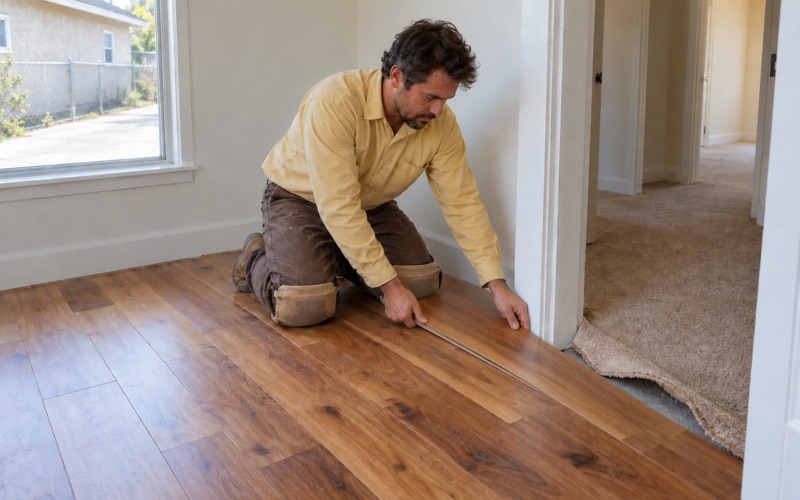
Postwar houses often come to us with carpet laid over the hardwood decades ago, and pulling it up is where the tack strip, pad adhesive and staples turn up. We remove all of it and fill the fastener holes before sanding. Where a later remodel added tile over part of the floor, old tile and black mastic are treated as a possible asbestos question before anything is scraped.
Refinishing Floors in a Contributing House
A contributing house gets the same careful process we use anywhere, with a little more weight on keeping what is there. The job starts with readings, not sandpaper: a wood moisture meter on the boards and the subfloor, written down before any material is ordered, so replacement stock is acclimated to the house rather than to a warehouse.
Before the First Pass of the Sander
We open and inspect the subfloor at any soft or springy spot, looking for water-swollen sheathing, loose joists and old termite damage such as frass or kick-out holes. Where water is the cause, we trace it to its source and document it with photos and readings an insurance adjuster can use. A refinish laid over an unsolved leak does not last.
Nearly all of the housing here predates 1980, so we treat each house as pre-1978 housing and follow lead-safe work practices from the EPA Renovation, Repair and Painting rule. Painted baseboards, shoe molding and stair risers get the most attention. Dust containment and HEPA vacuuming run through the whole job, and a dustless sanding system keeps what the drum sander and edger raise out of the rest of the house.
Finish Choices That Suit an Older House
Every finish we apply is legal in the South Coast air basin under the 275 g/L wood-coating limit in SCAQMD Rule 1113. Within that, owners choose between waterborne polyurethane, which stays clearer and keeps oak from turning orange, oil-modified polyurethane with its warmer amber tone, and hardwax oil, which is easier to spot-repair. Sheen level is a separate choice, and a lower sheen hides wear better.
Not every floor needs a full sanding. Where the finish is worn but the wood beneath is sound, a screen and recoat abrades the top coat and adds a fresh one without cutting into the wood, saving wear layer for the future. We check for old wax or polish first, because a new coat will not bond over it.
Stain goes on only after a test board, since some older boards take color unevenly and a blotchy stain across a whole room is hard to reverse. Stairs are priced per tread and riser rather than buried in a square-foot figure, and worn stair nosing is repaired or replaced to match the treads.
Living in the House During the Work
Most households here live in their homes through a refinish: 70.1 percent of occupied units are owner-occupied, and 97.1 percent of owner households live in detached houses. We give every household a written cure schedule showing when each room can be walked on in socks, when furniture can return and when a bedroom can be slept in again.
Keeping a Record of Floor Work in a Listed District
A floor refinish in a listed house is worth writing down, even though the state’s letter attaches no paperwork to normal maintenance. Future owners, inspectors and anyone later studying the district will want to know what was done to the floors and when. We leave each owner with a written, itemized invoice that describes the rooms, the repairs, the products and the finish.
What Our Written Record Includes
The estimate and invoice list each room separately, with board replacements, stair treads and risers, and any subfloor repair broken out on their own lines. Moisture readings go on the paperwork with the date they were taken. Where we replaced boards, we note the species and width we matched, so the next person to work on the floor knows what is new.
Photos come with the record: the floor as we found it, anything found underneath once carpet or damaged boards came up, and the finished rooms. For a water-damage job the photos and readings are organized so they can go straight to an insurance adjuster. Owners keep the whole set, and we keep a copy as well.
The County’s Plan for Historic Maintenance Guidance
Los Angeles County’s Westside Area Plan, adopted by the Board of Supervisors on March 11, 2025, treats Ladera Heights/View Park-Windsor Hills as a focus planning area. Its February 2024 draft goals and policies call for a comprehensive inventory of historic buildings and for guidance and technical assistance on the appropriate maintenance and repair of historic buildings.
The draft’s own examples are material treatments, roof materials, wall cladding, windows, doors and additions; interior floors are not named. If county guidance of that kind is published, a clear record of past floor work will make it easier to follow. Until then, the listing letter’s sentence on normal maintenance is the one we point owners to.
Rented Houses and Duplexes in the District
Renters occupy 29.9 percent of occupied units here, and a landlord’s record serves a different purpose. We write itemized estimates and invoices a landlord or tenant can use at move-out, where California’s security deposit law, Civil Code 1950.5, requires itemized repair costs. We also schedule a refinish between tenants so the floor is finished and cured by the turnover date the owner gives us.
- 20+ Years With Wood Floors
- Written, Itemized Estimates
- Low-VOC South Coast Finishes