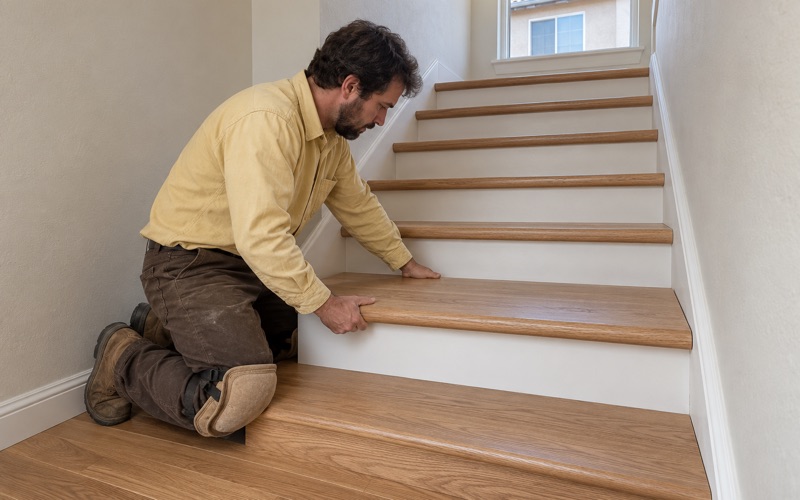
Hawthorne Wood Flooring has spent more than 20 years on wood flooring in Lennox, and a large share of that work is done for one kind of client: the person who owns a small rental property. A front house with a second unit behind it, a duplex, a fourplex on a narrow lot. We sand, repair and install floors in those homes one unit at a time.
The owner of two or four units thinks about floors differently than a homeowner does. A floor has to survive years of tenants, come back quickly at turnover, and be billed in a way that makes sense at a move-out inspection. So we work to the turnover date you give us, choose finishes that hold up between tenancies, and put every line of the job in writing.
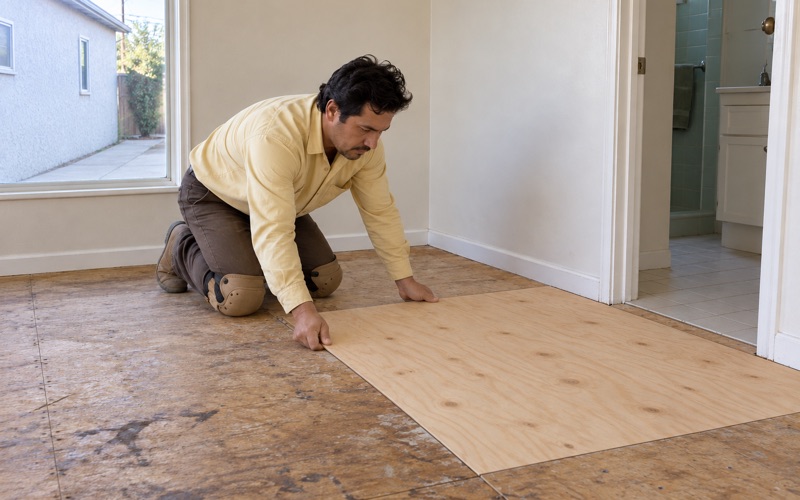
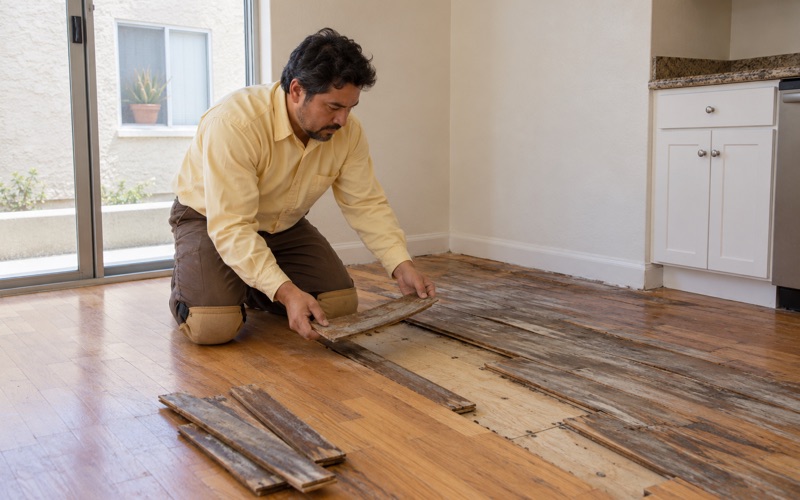
We also start below the surface. Carpet pad, staples and tack strip come up and the holes are filled before sanding, and the subfloor is opened and checked before we price any finish floor. On older rental units that inspection is where the real scope shows up, and it is far cheaper to learn it before the new boards arrive than after.
Small Lots, Several Homes, One Owner
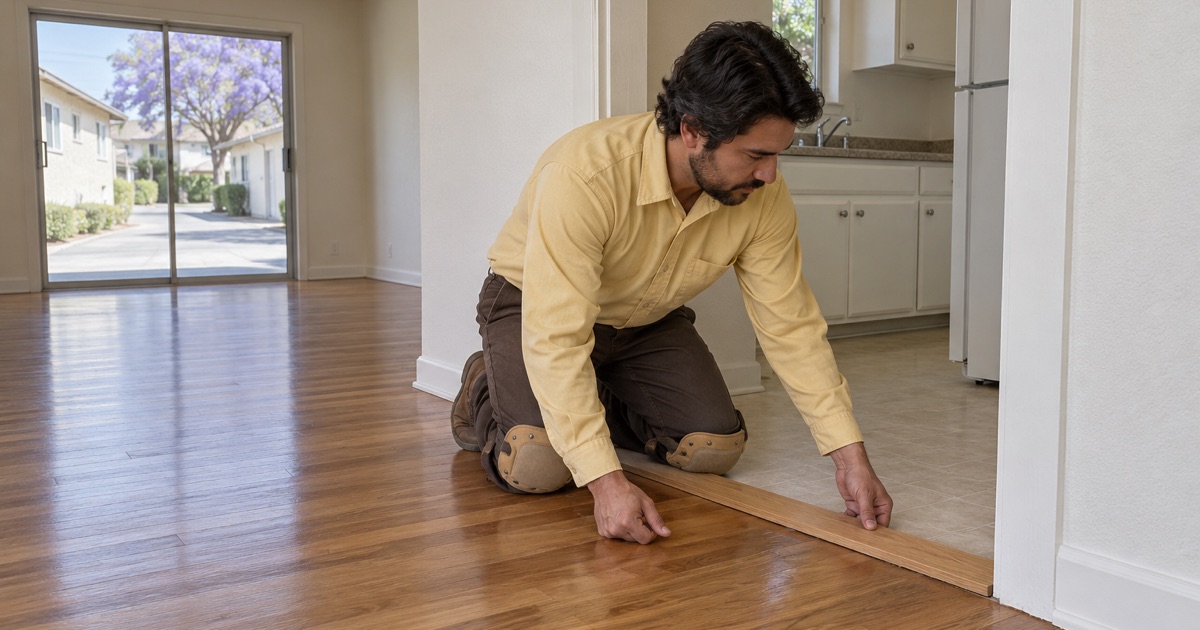
The shape of the housing here explains most of what we see on a job. Census figures from the ACS 2024 five-year estimates put 73.1 percent of occupied units in Lennox in renter hands, and 65.2 percent of those renter households live in structures of one to four units. That is not a city of large apartment complexes. It is a community of small buildings, most owned by individuals.
The County’s South Bay Area Plan describes Lennox as primarily lower-density residential and notes that small parcels are typical, with little new construction after 1970. Of the renter households on those small lots, 682 live in one-unit attached homes and 1,021 live in buildings of two to four units. Those are the homes we are called into most often.
What an Older Unit Hides
Age is the other constant. The same Census data show 91.3 percent of Lennox housing units were built before 1990, so nearly every rental we open has been through several rounds of flooring already. We regularly find carpet over oak, vinyl over carpet pad adhesive, and patched boards where a previous owner repaired a leak without matching the species or the direction of the run.
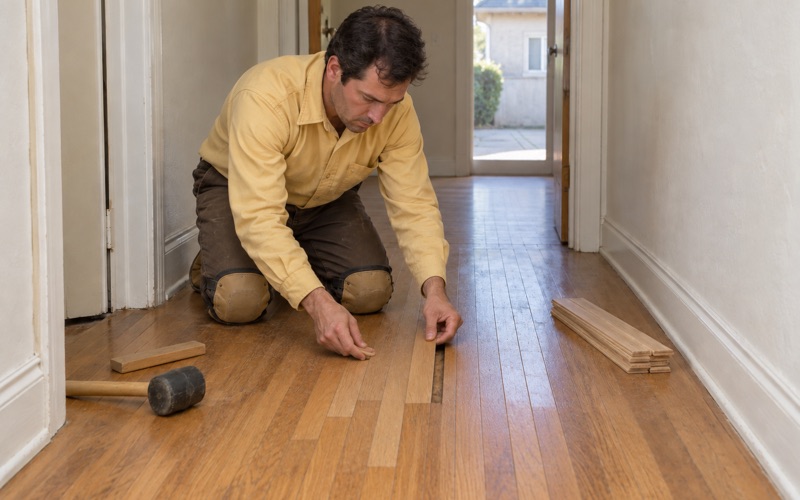
None of that is a reason to give up on the original floor. After the tack strip and staples are pulled and the holes are filled, oak that spent decades under carpet often sands out clean. Where it has cupped, gapped or been cut for old plumbing, a weave-in repair with matched boards usually costs less than tearing out the room and starting over.
Lead and Asbestos Questions in Pre-1978 Units
With 84.6 percent of Lennox units built before 1980, many rentals fall under the EPA Renovation, Repair and Painting rule for pre-1978 housing. We follow lead-safe work practices on those jobs: containment, HEPA vacuums, and careful cleanup around painted baseboards, shoe molding and door casings that a sander or pry bar can disturb.
Old flooring can raise a second question. A layer of 9x9 floor tile or black mastic under carpet or vinyl is treated as a possible asbestos concern before anything is scraped or sanded, and we stop and recommend an asbestos survey rather than guess. It adds a step, but it protects your tenants, our crew and the next person who works in that unit.
Looking for wood-flooring closer to Alondra Park? See Alondra Park Wood-Flooring.
How the County Rent Ordinance Sees a Lennox Property
Lennox is an unincorporated community, so the rules that shape a rental here come from Los Angeles County and its Board of Supervisors rather than from a city hall. The Los Angeles County Rent Stabilization and Tenant Protections Ordinance, found in County Code Chapter 8.52 and administered by the Department of Consumer and Business Affairs, is the one small landlords ask us about most.
We are a flooring company, not a legal advisor, and we never tell an owner how the ordinance applies to their property. What we can do is explain why the ordinance matters to the way a floor job is planned, scheduled and documented, and point you to DCBA for the answers that only the County can give.
Which Units the Ordinance Fully Covers
According to the DCBA bulletin revised on March 2, 2026, fully covered units are rental units in unincorporated areas of the County on a property with two or more rental units, regardless of legal permit status, with a certificate of occupancy or equivalent permit issued on or before February 1, 1995. Given the age of the Lennox stock, that description reaches a lot of small lots.
The phrase about permit status matters on a typical Lennox parcel, where a back unit may have its own history. We do not treat any unit’s permit status as settled either way. If there is a question about a structure, it belongs with Los Angeles County Public Works through the Southwest Building and Safety Office on West Imperial Highway, not with us.
The Small Property Landlord Category
The ordinance also recognizes Small Property Landlords. Under the bulletin, that category includes an owner who qualifies for and receives a Homeowners’ Property Tax Exemption on the property where the rental unit sits, which describes the owner living in the front house and renting the back. It also includes an owner who controls one rental property with no more than ten units.
For July 1, 2026 through June 30, 2027, the bulletin sets the general maximum increase at 1.919 percent, while a qualifying Small Property Landlord may raise rent one additional percentage point, to 2.919 percent. That extra point requires self-certification to DCBA, and DCBA decides who qualifies. We mention it because owners often plan floor budgets around the rent they can expect to collect.
Floor Work One Unit at a Time
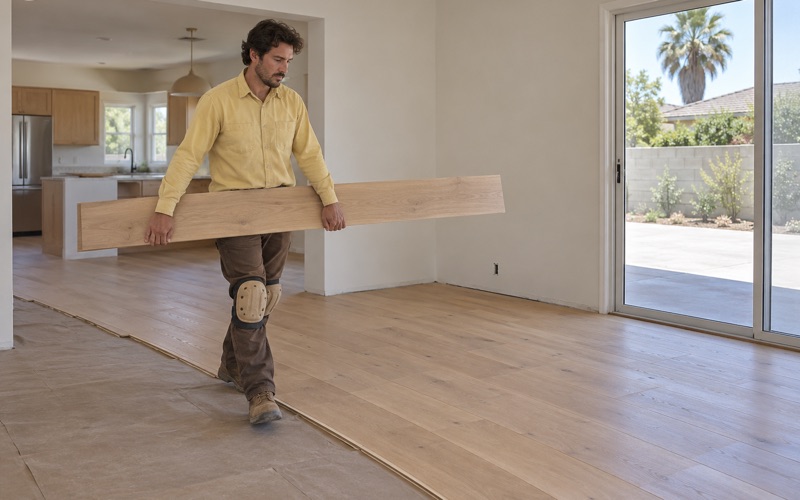
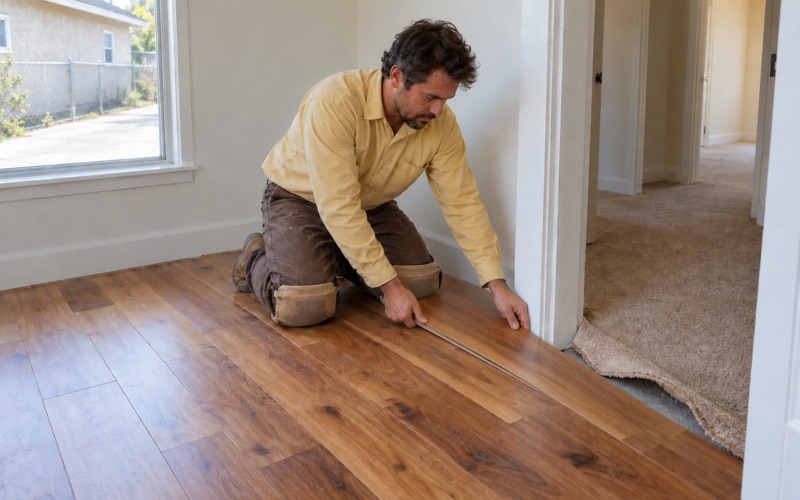
Small rental owners rarely redo every unit at once. Tenancies end at different times, cash flow is limited, and someone is usually still living next door or upstairs. We plan around that reality, treating each unit as its own job with its own schedule, while keeping species, stain and sheen consistent so the property reads as one place when all the work is finished.
That approach also spreads the cost. An owner might refinish the back unit this spring when a lease ends, replace the water-damaged kitchen floor in the front house next year, and leave the stairs for a later turnover. We keep notes on what went into each unit so the next job matches the last one.
Between Tenants
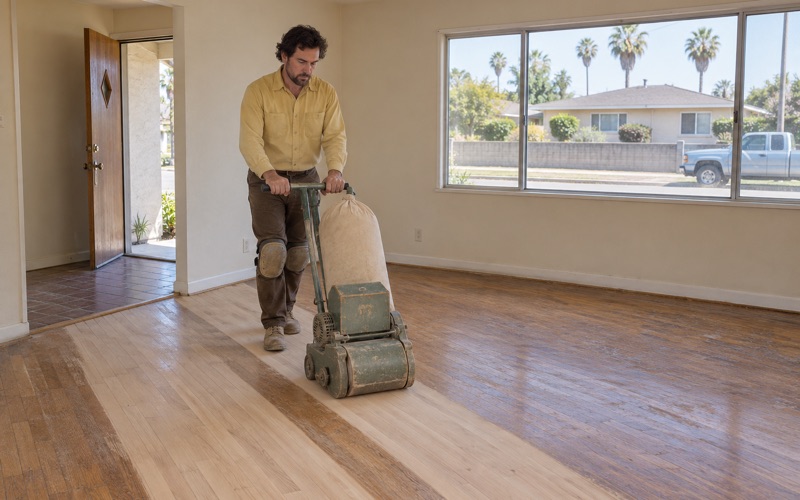
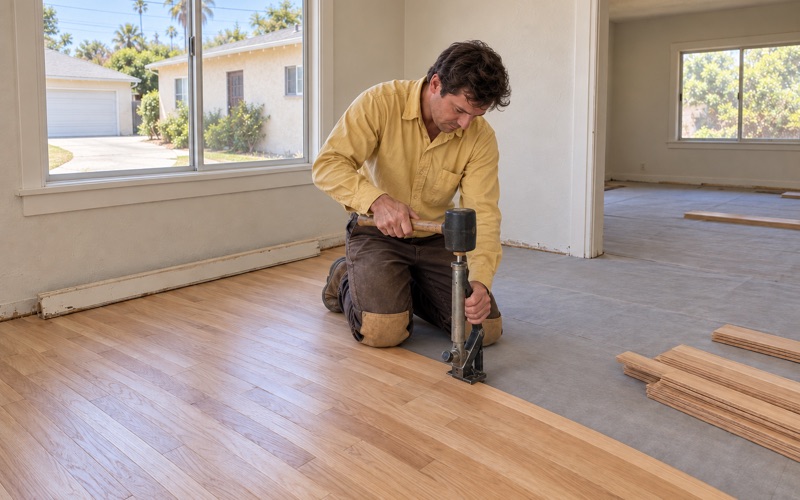
A vacant unit is the easiest place to do real work. We can pull carpet, open the subfloor, run the drum sander and edger through every room, and lay down a durable finish without anyone needing to walk on it. For most rentals we recommend a commercial-grade waterborne polyurethane in a satin sheen, which hides scuffs and recoats well.
The turnover date sets the schedule. We work backward from the day the new tenant gets keys, leaving time for the finish to cure before furniture comes in. If the subfloor inspection turns up soft sheathing or loose boards, we tell you right away so the repair fits inside the vacancy instead of pushing move-in back.
With a Tenant in Place
Sometimes the floor cannot wait for a vacancy. A leak, a failed finish or a lifted board in an occupied unit has to be dealt with while someone lives there. In those cases we use a dustless sanding system and sealed containment, and we give the household a written cure schedule showing when each room can be walked on, furnished and slept in again.
We work in sections when we can, so a family keeps a bedroom and a path to the kitchen. Scheduling happens between the owner and the tenant, and we keep to the hours agreed. Clear notice and a predictable plan make these jobs go smoothly, and they protect the relationship you have with a long-term tenant.
Moisture, Water and the Unit Next Door
Water is the most common reason we are called into an occupied Lennox rental. When a floor cups or buckles, we trace the moisture to its source, whether that is a supply line, a water heater or a leak from the unit above, and record meter readings and photos an insurance adjuster can use.
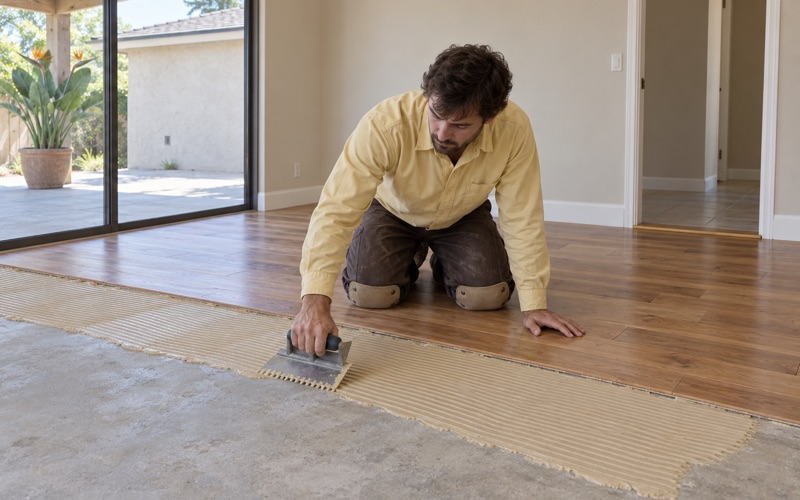
Before any new material is ordered, we measure moisture content in the wood and in any concrete slab, and write the readings down. On stacked units we choose acoustic underlayment with the neighbor below in mind. Every finish we apply is legal in the South Coast air basin under SCAQMD Rule 1113 and its 275 g/L limit for wood coatings.
Records a Small Landlord Keeps
A small rental owner is often the property manager, the bookkeeper and the maintenance crew all at once. The County’s systems assume records exist, and so do California’s rules on deposits. We make sure our part of the paper trail is complete, specific and easy to hand over when someone asks for it.
That means estimates and invoices that separate each room, each repair and each material. It also means keeping the moisture readings, photos and product information from the job, so that a question raised two or three years later can be answered from the file instead of from memory.
Itemized Estimates and Move-Out Statements
California Civil Code 1950.5 requires a landlord to give an itemized statement of deductions when part of a security deposit is kept, and it separates damage from normal wear and tear. Our written estimates and invoices list the work unit by unit and line by line, so a landlord or tenant can use them at move-out.
That detail helps both sides. A tenant can see what a pet urine stain actually cost to repair, apart from ordinary traffic wear on the finish. An owner has a clear record if a deduction is ever questioned. We price stairs per tread and riser rather than folding them into a square-foot figure, which keeps that part of the bill readable too.
Registry, Self-Certification and County Inspections
The same DCBA bulletin says a landlord may raise rent only after registering each fully covered unit with DCBA through its Rent Registry portal, and a Small Property Landlord seeking the additional point must self-certify. Those are County filings the owner handles, and we stay out of them. What we provide is a dated record of the work done in each unit.
The County’s Rental Housing Habitability Program, run by Public Health, adds routine inspections of unincorporated rental properties with two or more units once every four years. A sound floor with no lifted boards, exposed nails or soft spots is simply one less item on that list. When an inspection flags a floor, our written scope gives you something concrete to show for the repair.
- 20+ Years With Wood Floors
- Written, Itemized Estimates
- Low-VOC South Coast Finishes