Hawthorne Wood Flooring has handled wood-flooring in Lawndale for more than 20 years, and most of that work has been the practical kind: a worn hallway sanded back to bare wood, a few water-stained boards replaced by the kitchen, a bedroom floor finished again before new tenants arrive. We size each job to the room and the budget in front of us, not to a package.
A lot of the homes we walk into here are rented, and a lot are lived in by the people who own them. Both groups ask the same first questions. What will it cost, how long will the room be out of use, and what paperwork will we get at the end? Our answer to that last one is always a written, itemized estimate before work starts and a matching invoice when it ends.
This page covers the floor side of home improvement in Lawndale: refinishing and repairing the wood in older houses, small projects that fit a tight budget, and how a resident might think about a city rebate program when planning purchases. We explain what the program says in its own words and leave the eligibility questions with the city, where they belong.
Lawndale’s Shop Local Home Improvement Rebate
On July 22, 2025, the City of Lawndale posted a flyer introducing its Shop Local Home Improvement Rebate Program. The flyer says each resident of Lawndale is eligible to receive up to $500 in rebates for supporting Lawndale-based businesses, and that only receipts for home improvement related purchases count. It names no product list, no deadline and no funding source.
The words each resident matter in a city like this one. On ACS 2024 5-year figures, 63.0 percent of Lawndale households rent their homes, and a program written for residents rather than property owners reads as open to that whole group on its face. Whether a particular purchase is accepted is a decision the city makes, and we do not make it for anyone.
How the Receipts Are Counted
The flyer spells out two rules about receipts. Receipts under $50 cannot be combined, so several small purchases do not add up to one qualifying amount. Receipts over $50 are rounded down to the nearest $50 increment, which means the rebate on any single receipt lands on a round figure at or below what was actually paid.
For anyone planning home improvement spending around the program, those rules point toward fewer, larger purchases rather than many small ones, and toward keeping every receipt with the business name and date legible. We are not telling anyone that a given purchase will be accepted. We are pointing out that the flyer rewards organized records, and that is simply good practice on any home project.
What the Flyer Leaves Open
The flyer does not say whether flooring materials, floor labor or any other category qualifies, and it does not say whether the program is still accepting receipts today. We have not established either answer, so we will not claim one. A resident weighing a floor project against the rebate should ask the city before counting on it.
What we can say is that our estimates and invoices are itemized line by line, with materials separated from labor, and every document shows our business name and the job address. If the city asks what a receipt covers, the paper we hand over will answer that question without anyone having to reconstruct it from memory.
Who to Ask at City Hall
The flyer directs questions to the Finance Department at (310) 973-3246 or the Community Development Department at (310) 973-3230. Those two offices are the right place to confirm current status, what counts as home improvement, and how a receipt should be submitted. We suggest calling before any purchase you are hoping to include, not after.
Looking for wood-flooring closer to West Athens? See Wood-Flooring Services in West Athens.
Small Floor Projects for Renters and Owners
A floor does not have to be redone wall to wall to look and wear better. Much of the work we do in Lawndale is a single room, a stretch of damaged boards or a staircase, priced on its own so a household can decide one piece at a time. Small jobs still get the same moisture readings and subfloor check as large ones.
Repairs That Fit a Modest Budget
A screen and recoat is often the least expensive way to bring back a dull floor. We abrade the existing finish, clean up the dust and apply a fresh coat, leaving the wood itself untouched. It only works when the old finish is sound, so peeling polyurethane, pet urine stains or bare gray wear paths call for sanding instead.
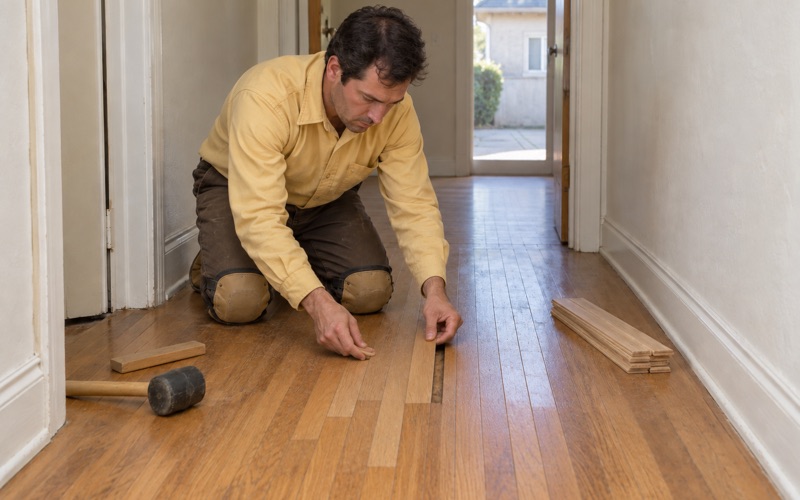
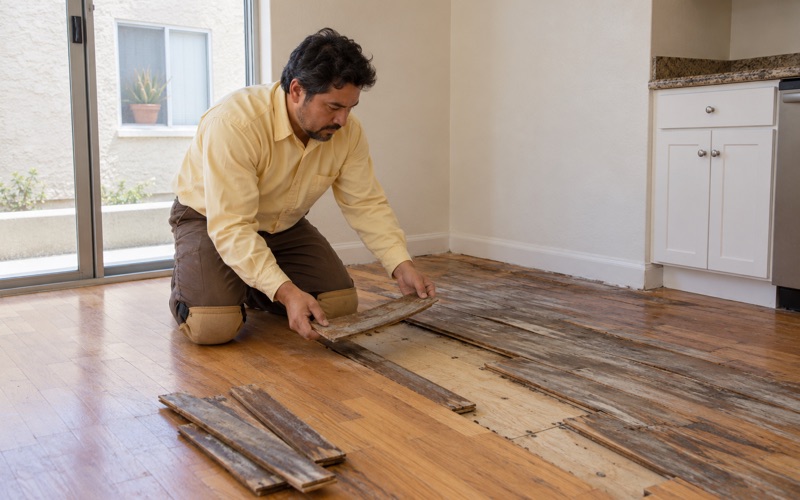
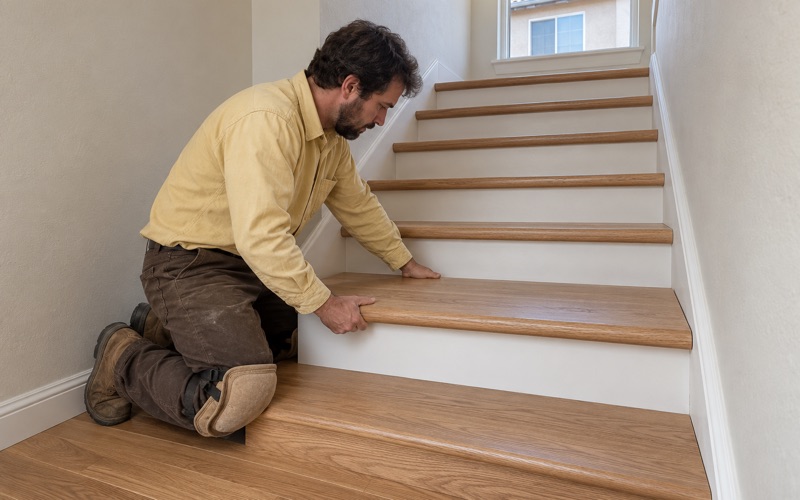
Board replacement and a weave-in repair handle the spots that a recoat cannot, like a sink leak that stained a few rows or a burn by the hearth. We cut out the damaged boards, lace new ones into the existing pattern and blend the finish. Stairs are priced per tread and riser, so a household can do the steps without being quoted a square-foot figure that hides the real cost.
Paperwork a Landlord and Tenant Can Both Use
When a rental changes hands, the floor is one of the first things people argue about. California’s Civil Code 1950.5 requires an itemized statement of deductions when a landlord keeps part of a security deposit, and normal wear and tear is not the tenant’s to pay for. Our itemized estimates separate damage from age, so both sides are working from the same written description.
For owners, we schedule around the turnover date the owner gives us and choose finishes that hold up between tenants. For renters, we only work with the property owner’s written go-ahead, and we are glad to put the scope in writing so nobody later disputes what was done, what it cost or who asked for it.
Attached and Upstairs Units
Not every Lawndale home is a detached house, and upstairs work brings its own concerns. When we install over another unit, we pick an acoustic underlayment with the neighbor below in mind and read the building’s own rules before we start. A water-stained ceiling below is traced to its source, whether that is a supply line or the unit above, and documented with photos and readings.
Refinishing Lawndale’s 1950s and 1960s Floors
Lawndale’s housing stock is older than its 1959 incorporation date might suggest. Of the city’s 10,259 housing units, 71.7 percent were built before 1980, and the 1960s are the largest single building decade at 21.7 percent, with the 1950s close behind. Floors in houses of that age have usually been covered, refinished or patched at least once before we arrive.
Lifting What Covers the Floor
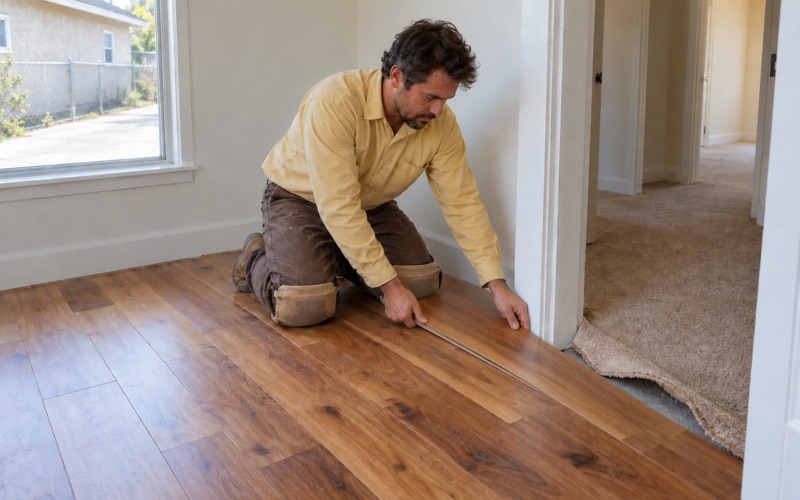
Many of these houses have had carpet laid over whatever was there first, and we do not guess what that is until it is exposed. When carpet comes up, we pull the carpet pad, every flooring staple and the carpet tack strip, then fill the holes those leave behind. Skipping that step is why some refinished floors show a dotted border around each room.
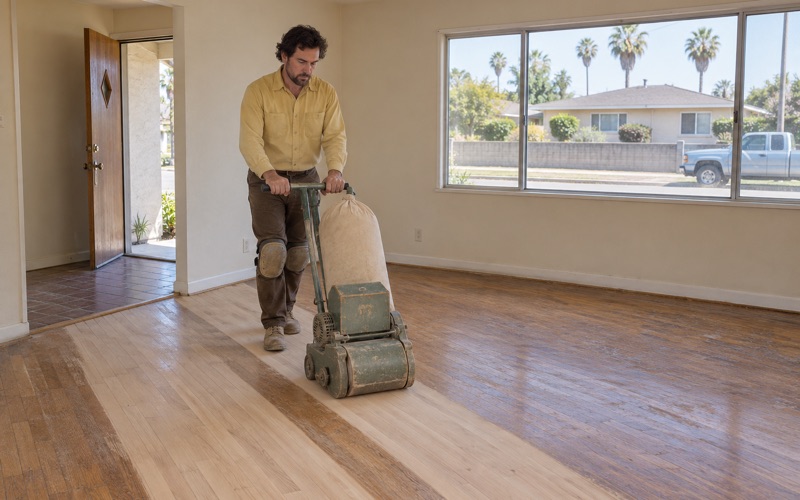
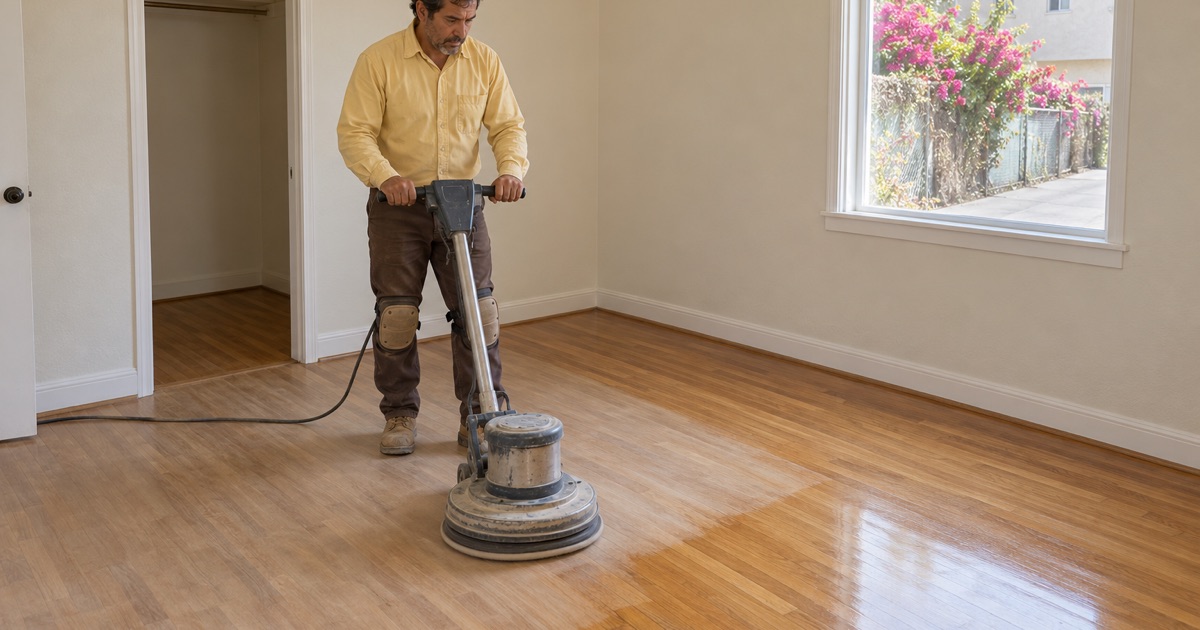
Once the surface is clear, we look at what the wood can take. Boards that have been sanded several times may not have enough thickness left for another full sanding, and engineered flooring depends on its wear layer thickness. We tell you which case you are in before quoting, and whether a screen and recoat, a full sanding or partial board replacement makes the most sense.
Lead-Safe Work in Older Houses
Many homes built before 1978 may carry lead-based paint on baseboards, shoe molding and door casings, and sanding next to them can put that dust into the room. On pre-1978 housing we follow the EPA Renovation, Repair and Painting rule’s work practices: containment at doorways, plastic over vents, HEPA vacuum cleanup and careful handling of trim we remove and reinstall.
Old Tile and Black Mastic
Some older floors have vinyl tile hidden beneath the carpet, and 9x9 asbestos floor tile and black mastic adhesive turn up in homes of that era. We treat either one as a possible asbestos question and stop before sanding or scraping. An asbestos survey settles it, and SCAQMD Rule 1403 governs how any confirmed material is removed before we go further.
The Subfloor Before the Price
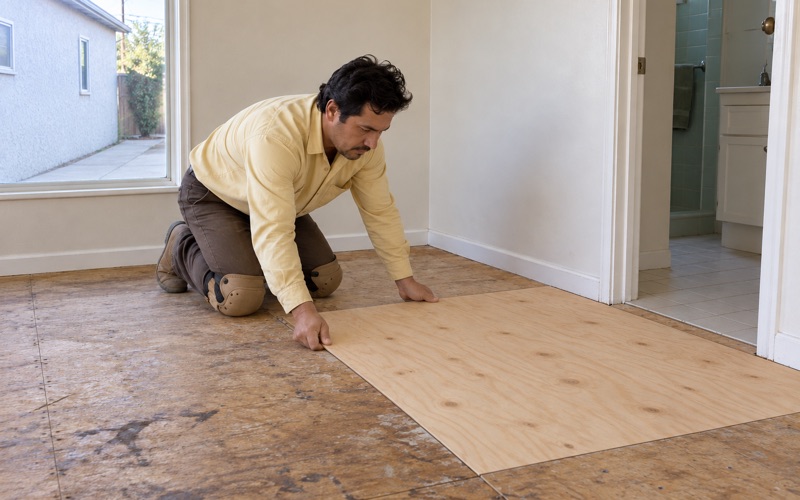
We open the floor and check the subfloor before pricing any new finish floor. Soft spots, water-swollen plywood subfloor sheathing and a loose floor joist are much cheaper to find now than after new boards are down. Squeaks and sloping floors often trace back to this layer, so we explain what we found and why it matters to the quote.
Planning a Floor Project Around Local Purchases
A floor project is really a sequence of decisions: what to repair, what to refinish, what to replace and in which order. Getting that sequence right saves money whether or not a rebate is part of the picture. We walk through it on site, room by room, and put the recommended order in writing with each step priced separately.
Sequencing the Work
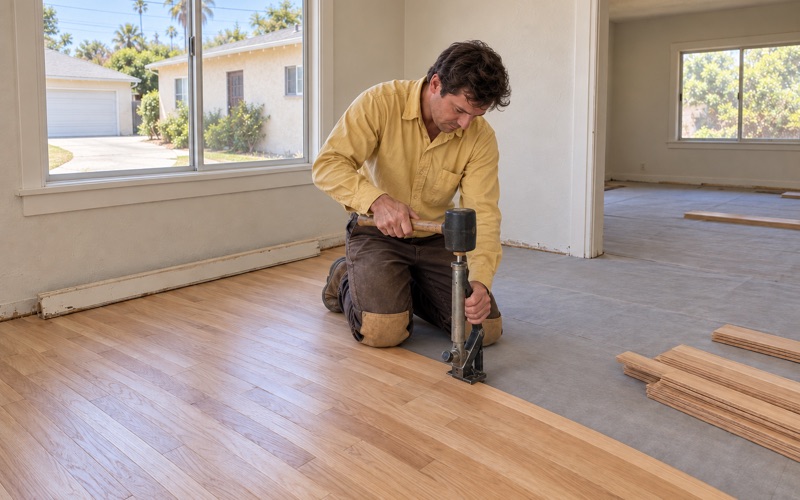
We usually suggest handling repairs first, then refinishing, then new installation, because sanding and finishing affect every room around them. Grouping rooms that share a hallway into one sanding visit avoids a second round of containment and cure time. If a household would rather spread the work over months, each phase gets its own itemized estimate and invoice.
A resident who plans to ask the city about the rebate can use that phased paperwork to see exactly what was bought, from whom and when. We make no promise about how the city will treat any of it. We simply keep every line clear enough that the question can be answered quickly by the people who decide.
Moisture, Finish and Cure
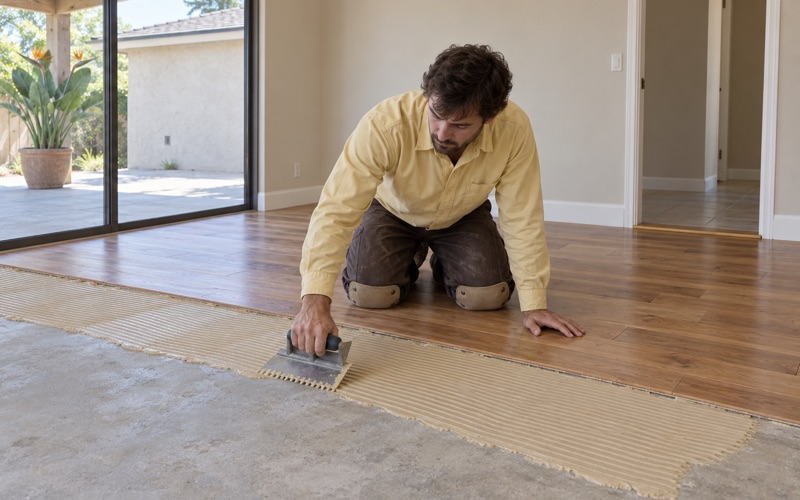
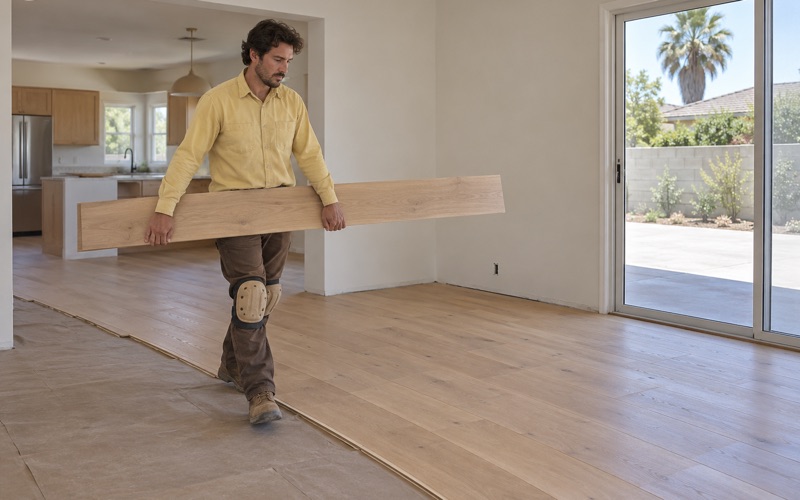
Before we order material, we take readings with a wood moisture meter and, over any concrete, an ASTM F2170 in-situ relative humidity test or a calcium chloride moisture test, and we write the numbers down. New boards acclimate in the house so their moisture content settles near the room’s before installation, which limits cupping, crowning and board gaps later.
The finishes we use are chosen from products legal to apply in the South Coast air basin under SCAQMD Rule 1113 and its 275 g/L wood-coating limit, including waterborne polyurethane and hardwax oil options. Every job comes with a written cure schedule showing when each room can be walked on, furnished and slept in, so a household living through the work can plan the week around it.
- 20+ Years With Wood Floors
- Written, Itemized Estimates
- Low-VOC South Coast Finishes