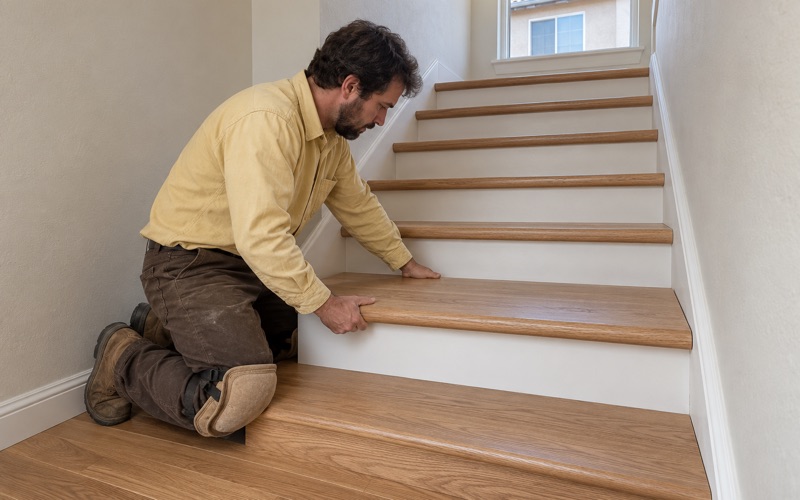
Hawthorne Wood Flooring brings more than 20 years of wood flooring in Inglewood to a city where most floor jobs start with a landlord’s question rather than a homeowner’s. We install, sand, refinish and replace wood floors in rented houses, duplexes, fourplexes and larger buildings, and we schedule the work to the turnover date an owner gives us.
Floor work in a rental here is not only a carpentry decision. The city’s rent rules draw a line between routine repair and a capital improvement, and the building under the floor is usually old enough to raise asbestos and lead questions before anything is scraped. We plan for both before a price is written.
Every estimate we send is written and itemized, so an owner can file it, a property manager can compare it, and either side can use it at move-out. What follows explains how we approach floors in Inglewood’s rental stock: what the ordinance says, what it leaves open, and how we sequence the job so nothing surprises anyone.
How Inglewood’s Housing Protection Ordinance Treats Floor Work
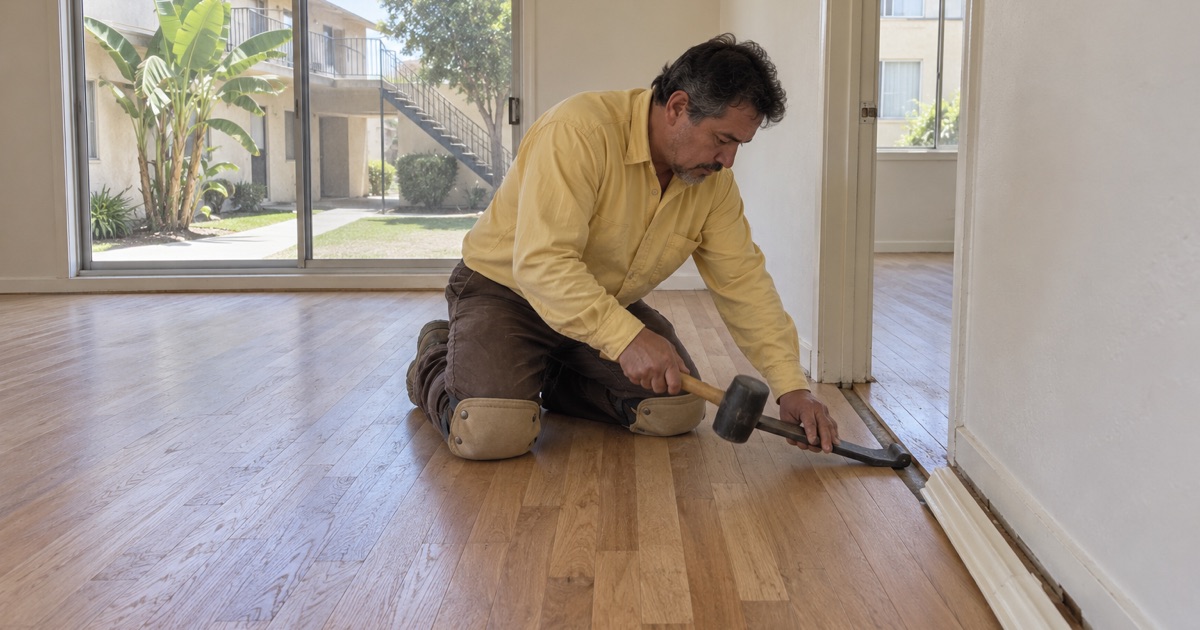
Inglewood regulates rents and evictions under its own Housing Protection Ordinance, No. 21-09, which took effect on June 10, 2021. The city describes it as designed to protect tenants from excessive rent increases while allowing landlords a fair and reasonable return. For a flooring contractor, the parts that matter are the definitions, because they decide how a floor job is described on paper.
What the Capital Improvement Definition Names
Section 8-125(a) of the municipal code defines a capital improvement as the abatement of hazardous materials, including lead-based paint, mold or asbestos, or the addition or replacement of listed improvements with a useful life of five years or more. The list runs from structural, electrical and plumbing systems to roofing, carpeting, draperies, security gates and fencing.
Wood flooring does not appear on that list by name. Carpeting does, and the list closes with other similar improvements as determined by the Rental Housing Board. That leaves the classification of a new wood floor to the Board, not to us and not to the owner. We describe the ordinance’s wording to clients; we do not predict how the Board will read it.
Capital Improvement or Routine Repair
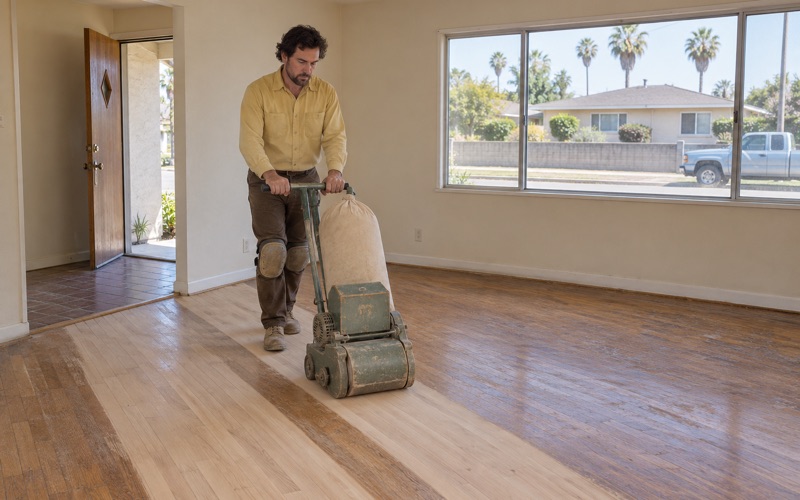
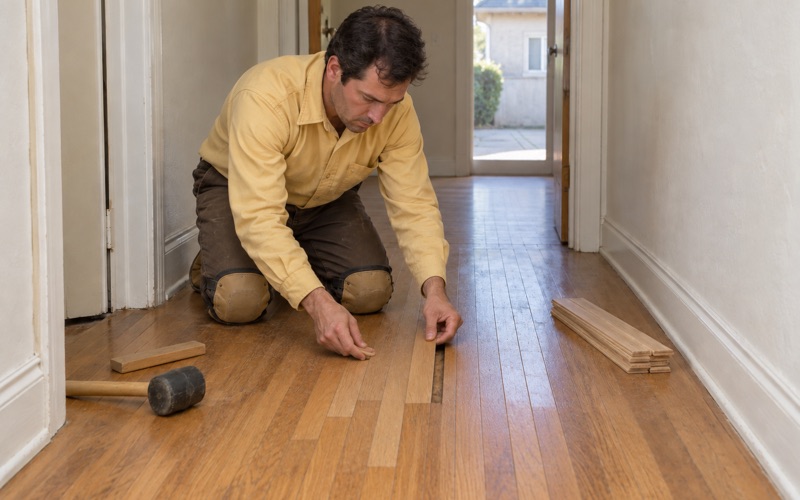
The same definition ends with a sentence that shapes a lot of floor work: capital improvement does not include normal or routine maintenance or repair. Section 8-125(e) also counts repairs, replacement, maintenance and painting among the housing services a tenant receives. A screen and recoat, a weave-in repair of a few damaged boards, or a squeak fixed at the subfloor all sit on the maintenance side.
A full tear-out and replacement across a unit is a different scale of job, and it is where owners ask us how the work should be written up. Our answer is practical: we itemize the abatement, the subfloor repair, the material and the labor as separate lines, so whatever an owner files later reflects exactly what was done.
What We Keep Out of the Conversation
We are a flooring company, not a law office. We do not tell an owner what rent to charge or a tenant what to expect in a notice, and we do not tell anyone that a floor will count toward an increase. What we can do is hand over clean records, dated photos and a scope of work that matches the invoice line for line.
Looking for wood-flooring closer to Westmont? See Wood-Flooring Services in Westmont.
Board Approval and the Cost Thresholds
Section 8-129 sets out how a capital improvement rent increase works in Inglewood, and every step runs through the Inglewood Rental Housing Board. An owner files an application with the Board and serves each affected tenant within five days. The section applies to improvements made on or after December 5, 2019, and the Board’s approval is the condition, not a formality.
The $5,000 and $10,000 Lines
The section applies only when a capital improvement costs over $5,000 to a rental unit, or $10,000 to the real property where the unit sits. A single-room refinish rarely approaches either figure. A whole-unit replacement that includes asbestos abatement, subfloor repair and new material can, which is one reason our estimates break those costs out rather than rolling them into one square-foot number.
Stairs are priced per tread and riser for the same reason. A landing, a stair nosing replaced along a common staircase, or a hallway shared by several units belongs to the property rather than to one unit, and an owner reading our invoice should be able to see which costs landed where.
Limits Written Into the Section
Where the Board does approve an increase, the ordinance caps it. It may not exceed $100 per month per rental unit, may not run more than 72 months, and may not recover more than 50 percent of the owner’s capital improvement cost. It also does not apply to units or new tenants whose initial rent was set after the owner filed the application.
The Board does not approve everything put in front of it. In July 2026 it denied two capital improvement pass-through cases, one for electrical upgrades and one for part of a full-property repipe, after tenant testimony contested whether the work qualified. Neither involved flooring, but both show the Board reading applications closely, and the paperwork behind them matters.
Itemized Records That Hold Up
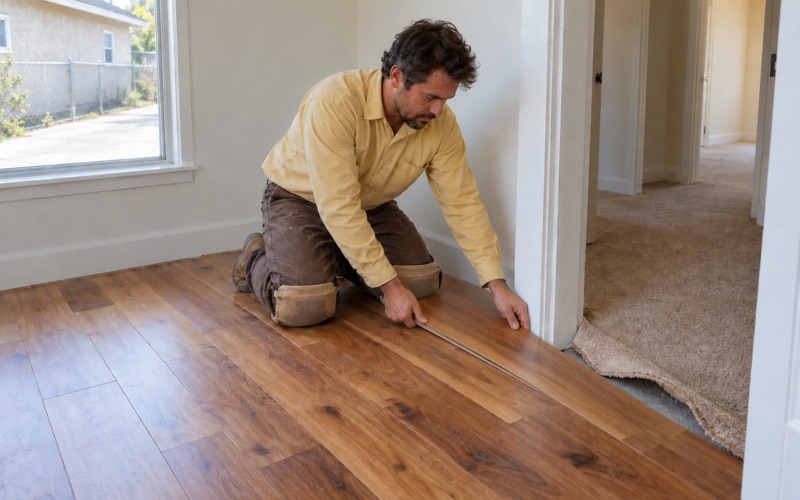
Our written estimates and invoices list every line: demolition, disposal, testing, abatement coordination, subfloor repair, underlayment, flooring material, finish coats and trim such as shoe molding, reducer strips and T-molding. The same record serves the owner in front of the Board, the property manager at budget time, and either side at move-out, where Civil Code 1950.5 calls for an itemized statement of deductions.
Replacing Old Floors in Inglewood’s Pre-1960 Rentals
Inglewood’s housing is old. Of the city’s 40,072 housing units, 49.8 percent were built before 1960, and 16.1 percent date to 1939 or earlier, according to the American Community Survey 2024 five-year estimates. The city was laid out in 1887 and incorporated in 1908, and its signed neighborhoods include Morningside Park, Fairview Heights and Century Heights.
That age matters more because 63.8 percent of Inglewood households rent. Older rental units often carry several floors laid over one another across different tenancies, such as carpet over sheet vinyl over tile, each from a different decade. We price nothing until we know what sits under the surface, because the bottom layer usually decides the job.
Asbestos and Lead Checks Before Anything Comes Up
The ordinance’s own definition lists asbestos and lead-based paint abatement, which reflects the building stock. Old 9x9 asbestos floor tile and black mastic under a floor are an asbestos question until a survey says otherwise, so we stop before sanding or scraping and arrange testing. Where abatement is needed, it is done under SCAQMD Rule 1403 before our crews return.
Houses and apartments built before 1978 get lead-safe work practices under the EPA Renovation, Repair and Painting rule. Baseboards, shoe molding and door casings in pre-1978 housing often carry old paint, and removing trim to lay a new floor disturbs it. We contain the work area, use HEPA vacuums and keep the dust out of rooms that are still lived in.
The Subfloor Comes Before the Price
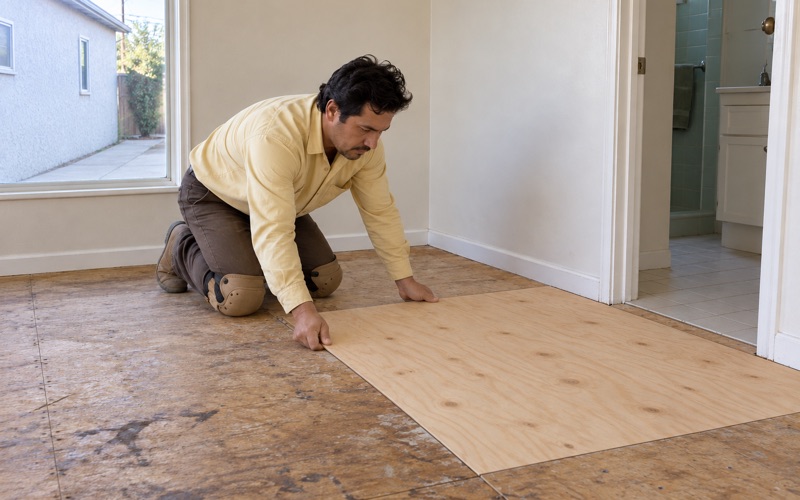
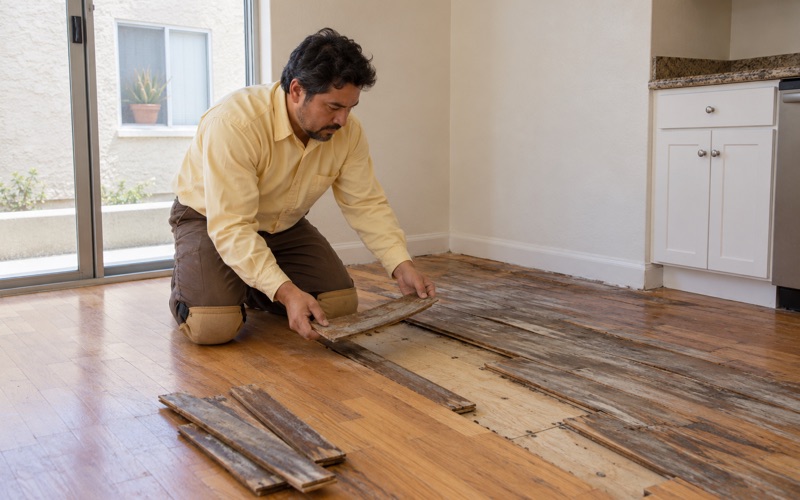
Once the old layers are off, we open and check the plywood subfloor or plank sheathing, the floor joists and any soft spots before we quote a finish floor. Water-swollen sheathing near a bathroom, a loose joist or drywood termite damage with frass and kick-out holes is far cheaper to fix now than as a callback after the new floor is down.
If a wood floor turns up once the carpet is pulled, we lift the carpet pad, flooring staples and carpet tack strip and fill the holes before sanding, so the refinish comes out clean. Whether the boards are worth saving depends on their remaining thickness, any pet urine stains and how many sandings they have already had.
Moisture Readings and Material Choices
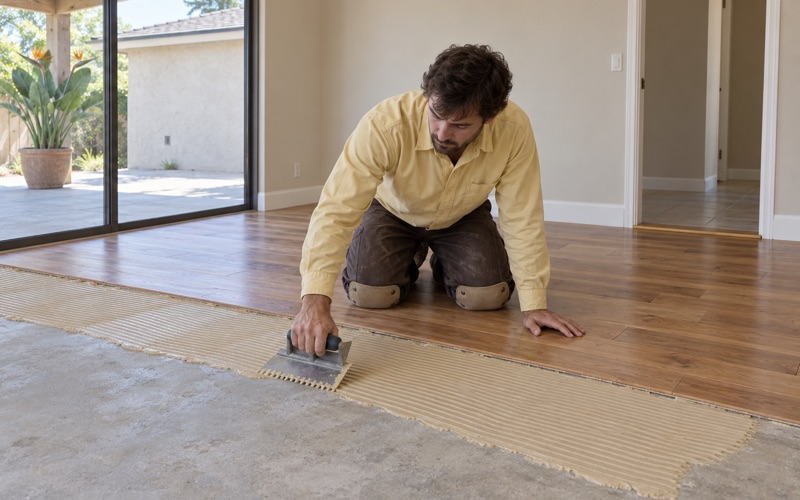
We measure moisture content in the wood with a wood moisture meter and, where there is a concrete slab, test it with an ASTM F2170 in-situ relative humidity test or a calcium chloride moisture test before ordering material. The readings go into the job file. New material acclimates following NWFA installation guidelines, and finishes are chosen under the SCAQMD Rule 1113 wood-coating limit of 275 g/L.
Planning Floor Work Around Tenancies and Turnover
In a rent-regulated building the calendar is part of the job. A floor replaced between tenancies interrupts nobody’s daily routine, while the same floor replaced under an occupied tenancy means furniture moves, containment and a written cure schedule. Owners tell us the date the unit has to be ready, and we build the sequence backward from it.
Vacant Units Between Tenants
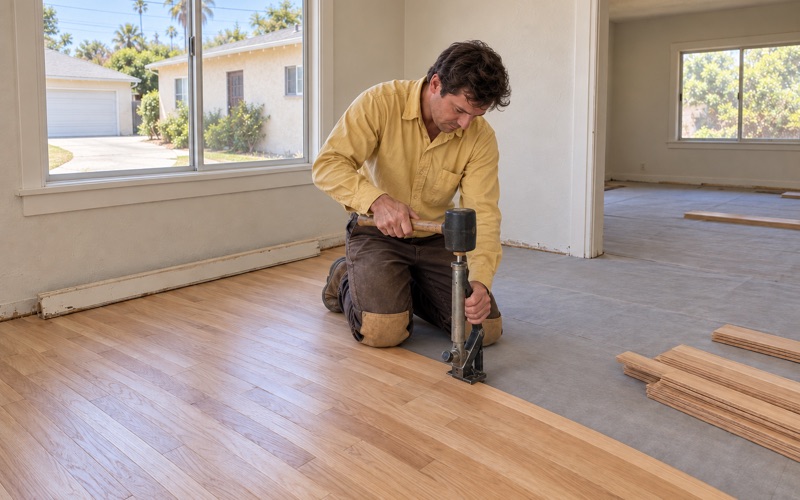
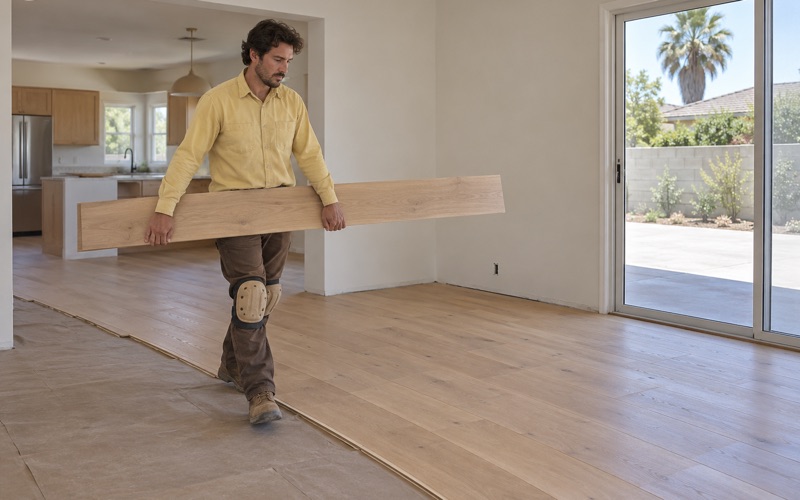
A vacant unit lets us work the whole floor in one pass: tear-out, testing, subfloor repair, installation and finish. We choose durable finishes, such as a waterborne polyurethane at a sheen level that hides scuffs, and a species with a Janka hardness rating suited to heavy traffic, so the floor holds up through the next tenancy rather than needing another sanding soon after.
Section 8-127(i) states that the rent article does not supersede an owner’s right to set the initial rent for new tenancies under state law. Owners often mention it when they explain why turnover is when they schedule major floor work. The timing decision is theirs and their advisers’; our role is to finish on the date they set.
Occupied Units and Neighbors Below
When a tenant is living in the unit, we work room by room with dust containment and hand over a written cure schedule, so the household knows when each room can be walked on, furnished and slept in. On upstairs units we choose acoustic underlayment with the neighbor below in mind and read the building’s own rules before work starts.
Stacked units bring their own floor problem, which is a leak from above. In Inglewood, 41.7 percent of housing units sit in structures of five or more units. When a floor cups or buckles, we trace the water to its source, including a unit upstairs, and document it with photos and moisture readings an insurance adjuster can use.
Registration and the Records Owners Keep
Owners of properties with two or more units register them with the Housing Protection Department’s Long Term Rental Division, and section 8-126 bars an unregistered owner from demanding or accepting rent. Single-family homes and condos owned by a natural person are not required to register. We do not handle registration, but our dated invoices sit well alongside those records.
Whether the job is a refinish between tenants, a board replacement after a leak or a full replacement over old tile, we start the same way in Inglewood: look under the floor, test what needs testing, write down every number, and schedule around the people who live there.
- 20+ Years With Wood Floors
- Written, Itemized Estimates
- Low-VOC South Coast Finishes