Hawthorne Wood Flooring has spent more than 20 years on wood flooring in Hawaiian Gardens and nearby, and a large share of that work lands in homes that are rented rather than owned. A landlord calls between tenants, a floor has to be sanded, patched or replaced, and the unit needs to be ready on a date that is already set. That schedule shapes how we price, plan and finish every job.
Rental floors get judged by more than one person. The owner wants a surface that survives the next lease, the incoming household wants a clean and safe room, and sometimes an inspector for a rental assistance program will walk the unit before anyone moves in. We write our estimates and invoices so each of those readers can see what was found, what was done and what it cost.
This page covers how we approach floors in homes rented to voucher households, what the federal housing standard says about floors in general terms, and how we scope a floor repair when a unit turns over. We do not speak for any inspector, and nothing we do guarantees an outcome, but we can make the condition of a floor clear and well documented.
A City That Runs Its Own Housing Authority
Who Runs the Voucher Program Here
Hawaiian Gardens administers its own rental assistance rather than leaving it entirely to a regional agency. HUD’s public housing agency listing names CA136, the Housing Authority of the City of Hawaiian Gardens, at 21815 Pioneer Boulevard, the City Hall address, and classifies it as a Section 8 agency. For an owner renting to a voucher household in the city, questions about the program start at City Hall.
The city describes its Housing Choice Voucher Program as helping very low-income families, seniors and people with disabilities afford decent, safe and sanitary housing in the private market. The phrase that matters for a floor contractor is private market. A voucher household rents from an ordinary owner, so the floor in that unit is the landlord’s to maintain, and the landlord is the one who calls us.
A City Where Most Households Rent
Census figures put 2,218 of the city’s 3,948 occupied units in renter hands, which is 56.2 percent. Renters are not concentrated in one building type either: 812 renter households live in one-unit detached houses, alongside hundreds more in duplexes, small plexes and larger complexes. For us, that means a turnover job can be a whole house one week and a single upstairs unit the next.
The city covers less than one square mile of land and was incorporated in 1964, and most of its housing is older than that suggests: 73.7 percent of units were built before 1980. Older rental floors tend to carry layers of history, including past repairs, patched boards and coverings laid over one another, so we price the work only after seeing what is actually there.
Owners Who Rent Out One or Two Units
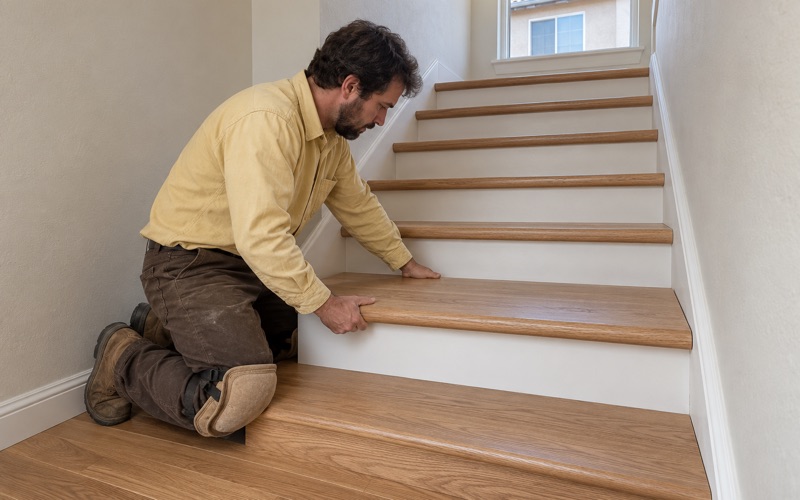
Many of the landlords we hear from own a single house or a duplex and manage it themselves. They do not have a maintenance crew, and a floor repair is often the largest item on a turnover list. We keep the scope readable for that owner: the rooms, the square footage, the stairs priced per tread and riser, and the finish, each on its own line.
Looking for wood-flooring closer to La Palma? See Wood-Flooring in La Palma.
What a Voucher Unit Has to Meet
Two Standards and a Transition Date
HUD is moving voucher inspections from the older Housing Quality Standards to a newer framework called NSPIRE. For the voucher program, HUD extended the NSPIRE compliance date to February 1, 2027, and Housing Quality Standards apply until then. Which standard the Hawaiian Gardens authority uses on a given inspection is a question for the authority itself, and we tell owners to ask it directly.
The practical takeaway is that the rules around floors are in transition during the same period many owners are planning work. An owner scheduling a floor project this year may see one standard applied now and another after the compliance date. We do not choose between them for anyone; we make sure the finished floor is sound, flat and free of obvious trip points.
What NSPIRE Says About Floors
NSPIRE’s floor language is more specific than many owners expect. It lists floor covering that curls, buckles or bulges to a 3/4-inch deviation as a deficiency, which is the kind of lifted board edge or ridged seam a foot catches on. It also says surface abnormalities such as hardwood cupping do not, alone, constitute a subfloor deficiency.
That second point matters for wood floors. Cupping, where board edges rise above the centers, usually signals a moisture problem, and it is worth fixing for its own sake. But the standard separates a surface change from damage to the structure underneath. We make the same separation when we assess a floor, and we write down which of the two we found.
What We Do and Do Not Claim
We work for the owner, not for the housing authority, and we do not inspect units on anyone’s behalf. What we can do is describe a floor’s condition accurately, fix what the owner asks us to fix, and leave a written record of the work, the materials and the moisture readings. That record is useful to an owner whatever an inspector later concludes.
Hazards, Wear and Repairs Between Tenants
Telling Wear From a Hazard
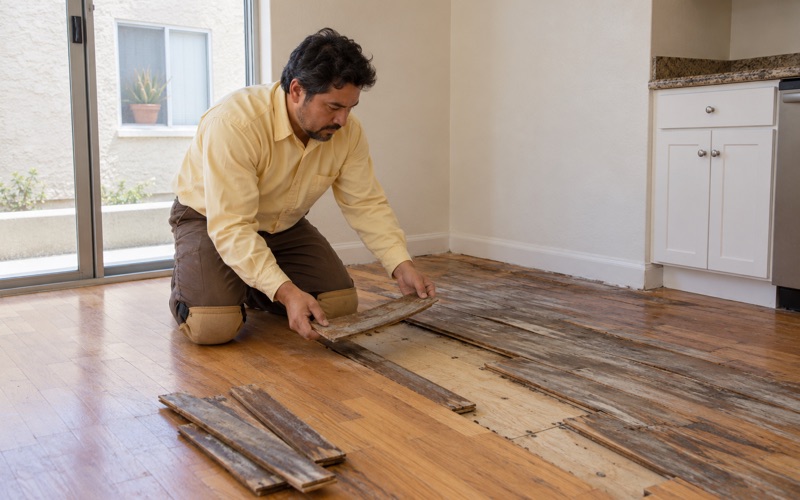
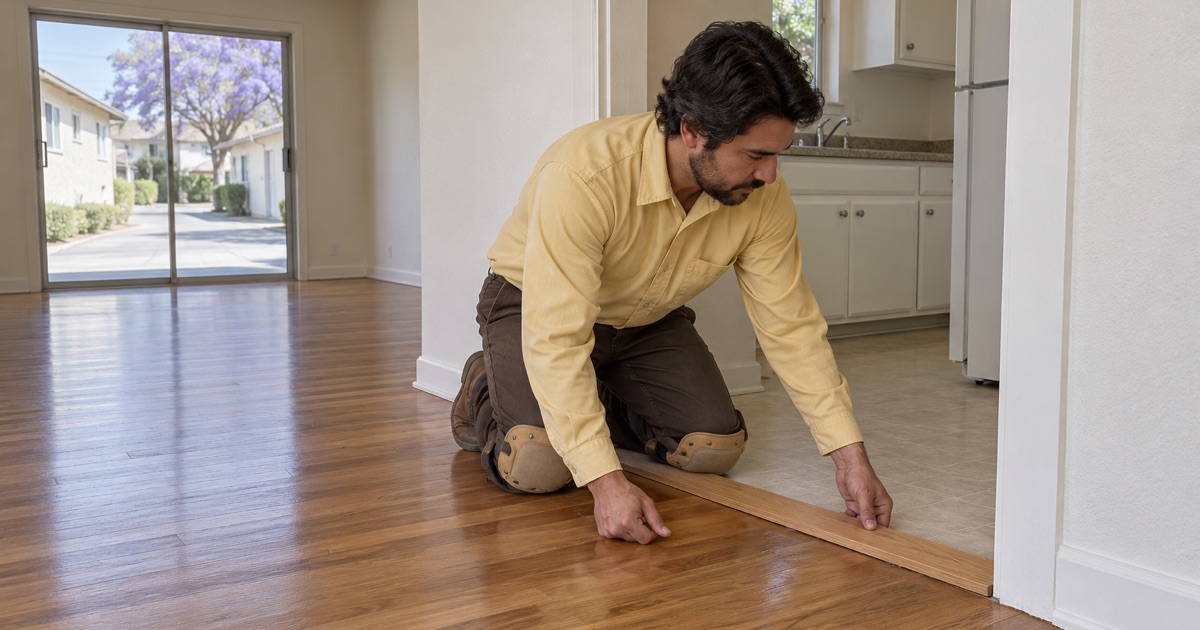
Most turnover floors show wear: dull traffic lanes, scratches near the entry, a gray tone where the finish has worn through. Those are real, but they are different from a board that has lifted, a soft spot that flexes underfoot, or a threshold that catches a toe. We sort what we see into those two groups on the estimate, so an owner can decide what must be done now and what can wait.
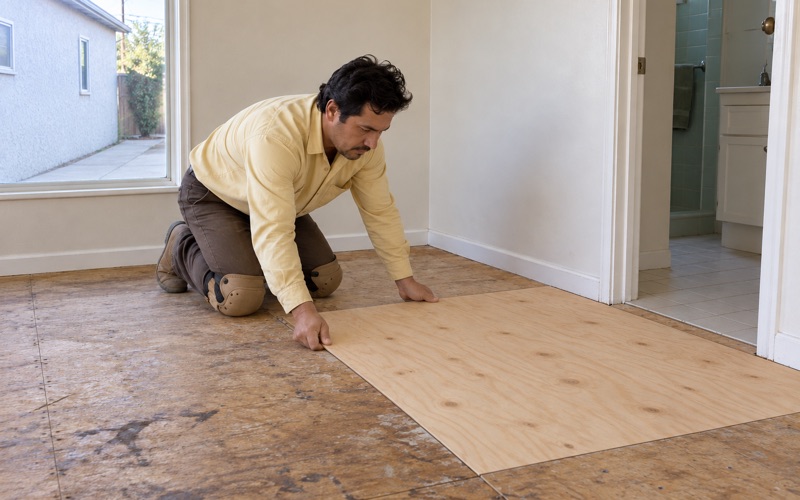
Soft spots get the most attention. Before we price any finish floor, we open and check the subfloor where it gives, looking for water-swollen sheathing, loose fasteners or a floor joist that has moved. Finding that before the finish goes down costs far less than finding it after a new tenant reports a bouncing floor in the hallway.
Water, Pets and the Unit Upstairs
In a multi-unit building, a stained or cupped floor often traces back to someone else’s plumbing. We follow water damage to its source, including a leak from the unit above, and document it with photos and moisture meter readings an insurance adjuster can use. Pet urine stains get the same care: we check how deep they go before promising that sanding will remove them.
Moisture content is measured in the wood, and in any concrete underneath, before we order material, and those readings go on paper. If a floor is still wet from a recent leak, we say so and wait rather than lay new boards that will cup or open gaps once the building dries out.
Scoping a Repair Between Tenants
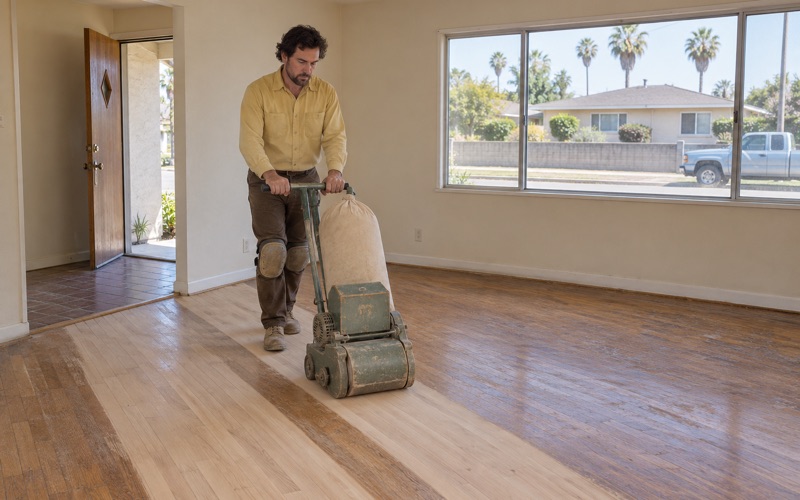
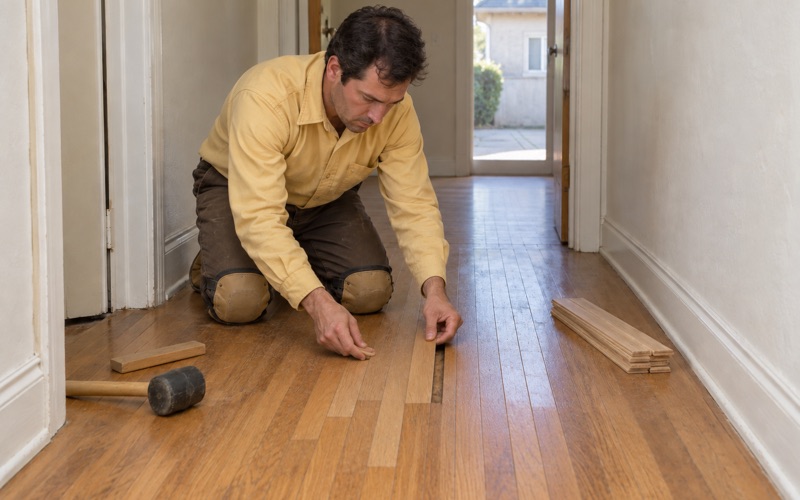
Turnover work has a fixed end date, so we scope it in layers. A screen and recoat can refresh a finish that is only worn at the surface. A full sanding with a drum sander, an edger and a proper grit sequence is for floors with deep scratches or stains. A weave-in repair or board replacement handles damaged sections without redoing an entire room.
Each option comes with a written cure schedule. The owner knows when the floor can take foot traffic, when furniture can come back and when the unit can be shown or handed over. We tie that schedule to the turnover date the owner gives us, and if the scope will not fit the date, we say so at the estimate rather than at the final walkthrough.
Deposits and Itemized Paperwork
When a tenant moves out, California’s security deposit law, Civil Code 1950.5, calls for an itemized statement of deductions and does not allow charges for normal wear and tear. Our estimates and invoices are itemized by room and task for that reason. An owner can show what was repaired, and a departing tenant can see what the work actually cost.
That same paperwork helps when a repair crosses a lease boundary. If damage was found at move-out but the fix happens during the next tenancy, the dates, rooms and readings on our invoice show when the work was done and why. We keep the language factual and leave the question of who pays to the owner and the tenant.
Planning Floor Work in Hawaiian Gardens
Older Homes and Lead-Safe Practices
Because so much of the city’s housing was built decades ago, many units here fall into pre-1978 housing, where old paint on trim and baseboards may contain lead. We follow lead-safe work practices under the EPA Renovation, Repair and Painting rule on those houses, with dust containment and a HEPA vacuum during and after sanding. That protects the crew, the owner and the household moving in next.
Old tile and black mastic under a floor get the same caution. Some older resilient flooring, including 9x9 tile, can contain asbestos, so we treat it as a possible asbestos question and stop before sanding or scraping. An asbestos survey answers it, and guessing does not. We would rather lose a day than disturb something that should have been tested first.
Finishes and Air Rules
Hawaiian Gardens sits within the South Coast Air Quality Management District, which limits the solvent content of wood coatings. We choose finishes from products legal to apply in the South Coast air basin under the 275 g/L wood-coating limit in SCAQMD Rule 1113. Waterborne polyurethane is a common pick for rentals because it dries quickly, stays clear and takes a screen and recoat well later on.
Sheen level is part of that decision. A satin or matte finish hides the fine scratches a rental floor collects faster than a high gloss does, and it makes the next refresh simpler. We explain the tradeoffs in plain terms, then write the product and the number of coats on the invoice so the next contractor knows exactly what is on the floor.
Upstairs Units and Shared Walls
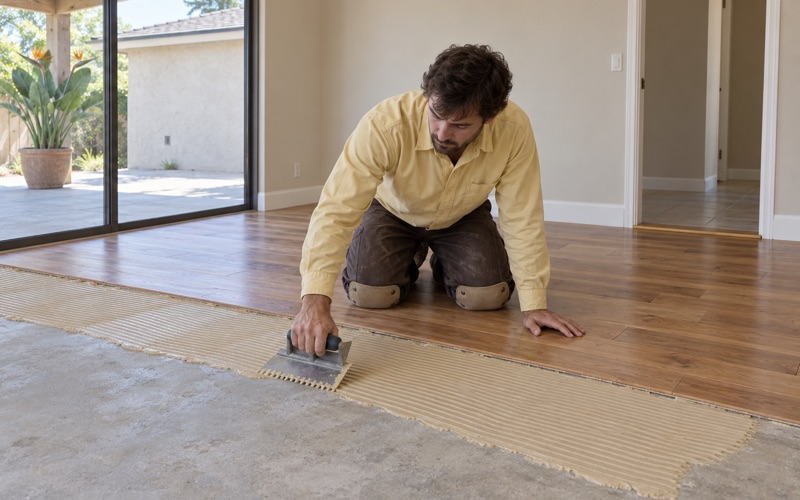
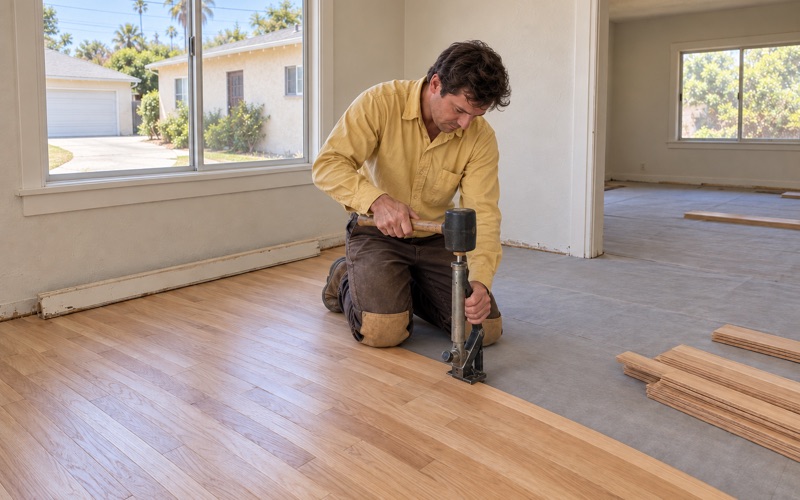
A large share of the city’s housing is attached or stacked, from duplexes and fourplexes to buildings of fifty units or more. On an upstairs install we choose acoustic underlayment with the neighbor below in mind and read the building’s rules before work starts. Glue-down, floating and nail-down installations each carry different sound and moisture tradeoffs, and we match the method to the floor and the building.
Getting an Estimate
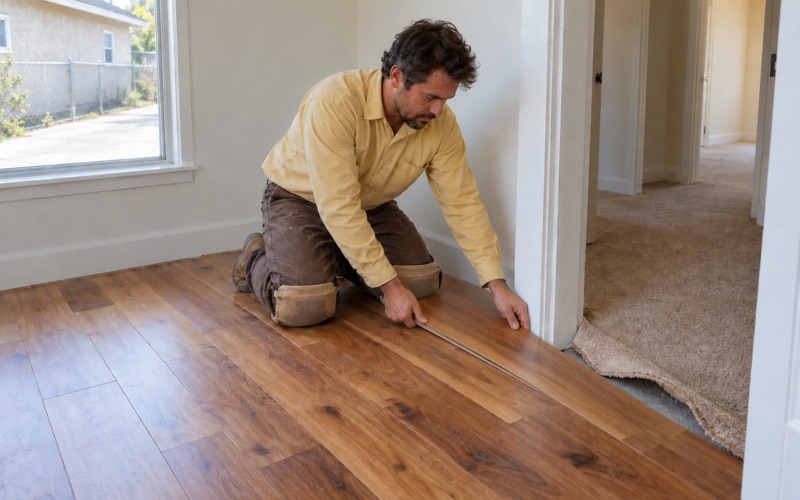
A useful estimate starts with a walkthrough. We look at every room in scope, lift a corner of carpet where the owner allows it, check the subfloor at any soft spot, and take moisture readings. Where carpet comes up, we pull the old pad, staples and tack strip and fill the holes before sanding, so whatever wood is underneath refinishes cleanly.
Then we write it up: rooms, square footage, stairs by tread and riser, repairs, finish and a cure schedule tied to the turnover date. For a voucher unit, the owner can use that document when talking with the housing authority about timing. Decisions about the unit stay with the owner and the authority; our part is a sound floor and a clear record of how it got that way.
- 20+ Years With Wood Floors
- Written, Itemized Estimates
- Low-VOC South Coast Finishes