
Hawthorne Wood Flooring builds and refinishes hardwood stairs in Hawthorne, CA, serving surrounding cities including Del Aire, Lennox, Alondra Park, Lawndale and West Athens. For more than 20 years we have installed new treads and risers, converted carpeted staircases to wood and brought worn stairs back with a full refinish, always pricing the work per tread and riser so you can see what each step costs.
Stairs take more traffic per square foot than any floor in the house, and they are also the place where a careless job is most visible. A gap under a tread, a nosing that does not line up or a finish that wears through on the front edge shows every time someone walks up. We fit each step on its own, rather than cutting a batch of treads to one size and hoping the staircase is square.
Many stairs in two-story houses, townhomes and condos were carpeted when they were built. Pulling that carpet is often the first step in a hardwood stair project, and it tells us whether the stairs can be refinished or need new wood.
Stair Parts and What Each One Does
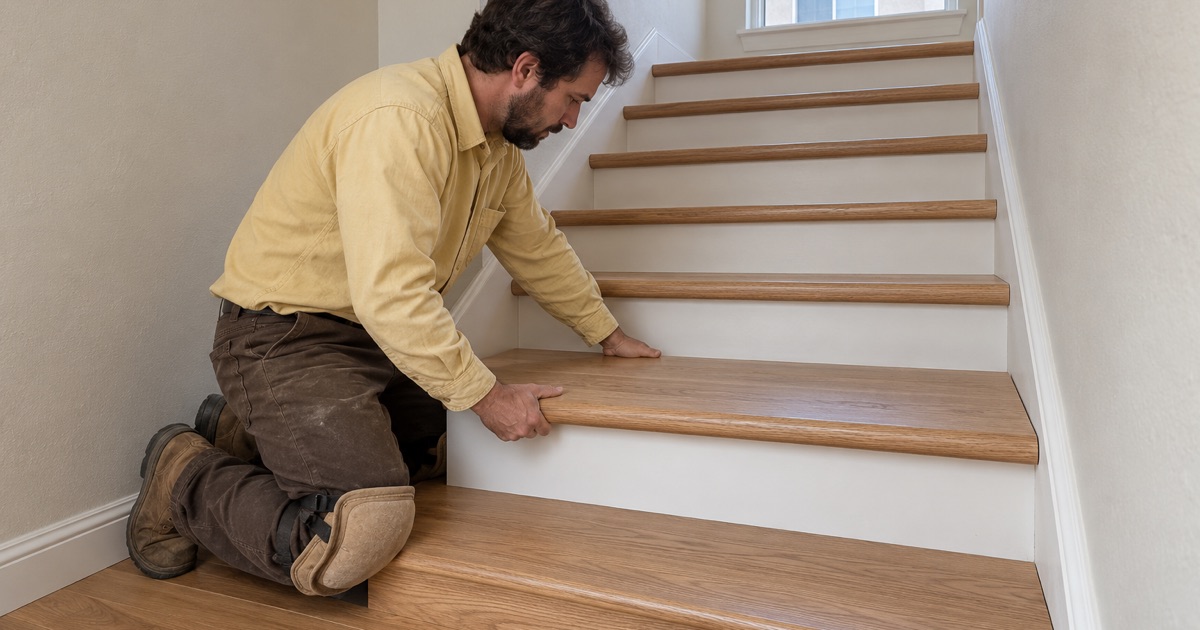
Treads, Risers and Nosings
The tread is the horizontal board you step on, the riser is the vertical face between steps, and the nosing is the rounded front edge of the tread. On a hardwood staircase, the treads are usually thick solid wood, the risers are thinner boards often painted white for contrast, and the nosing is either shaped into the tread or added as a separate piece.
Getting the nosing right matters for safety as well as looks. A consistent overhang and a rounded edge help your foot find each step, and every nosing on the run should line up in one straight line from top to bottom.
Landings and Where Stairs Meet the Floor
Landings are finished to match the treads, often with the same flooring used on the adjoining floor and a landing nosing at the edge. At the top and bottom of the stairs, the nosing and the adjoining floor need to meet flush. We plan these connections with the rest of the floor, so the stairs look like they belong to the room.
Where a new floor is installed at the top of a staircase, the floor height often changes. We fit a flush stair nosing that matches the new floor, rather than leaving a small lip or a mismatched reducer at the top step, which is exactly where a trip is most dangerous.
Converting Carpeted Stairs to Hardwood
What We Find Under Stair Carpet
Under stair carpet there may be finished hardwood treads that were covered for comfort, or rough construction lumber that was never meant to be seen. Finished hardwood can usually be sanded and refinished. Construction-grade treads are covered with new hardwood caps and risers, which gives the look of a solid wood staircase.
Removing the carpet also means pulling tack strip, staples and pad from every step. We fill the holes and check each tread for squeaks, loose fasteners and cracks before anything new goes on.
Capping Stairs With New Treads
When the existing treads cannot be refinished, we cut back the old nosing, then install new solid hardwood treads and risers glued and fastened to the stair structure. Each tread is scribed to fit the walls and stringers on its own step. That custom fit is what keeps the treads tight and quiet for years.
Adding a tread cap raises the height of each step slightly. We check the first and last steps carefully, since building codes require the risers on a flight to be close to equal, and a top or bottom step that is noticeably different is a tripping hazard.
Refinishing Hardwood Stairs
Sanding Stairs by Hand and Machine
Stairs cannot be sanded with a drum sander. We use edgers, orbital sanders and hand tools on each tread, riser and nosing, and we scrape the corners where machines cannot reach. This detail work is why stair refinishing is priced per step, and it is also what makes a refinished staircase look crisp rather than blurred at the edges.
Stain, Finish and Grip
We match the stair stain to the floor it meets and apply a durable finish that meets the South Coast air district’s VOC limit. For stairs, we recommend a satin or matte sheen for better grip and less visible wear. If you plan to add a runner, we can finish the center section differently to save cost.
Painted Risers and Balusters
Many homeowners prefer painted risers under stained treads for contrast. We protect the finished treads while painting, and in houses built before 1978 we use lead-safe practices when sanding or scraping old paint on risers, stringers and balusters.
Stairs in Rentals and Condos
Durable Stairs for Rental Units
Carpeted stairs in a rental wear out quickly and are hard to keep clean. Hardwood stairs with a tough finish can be refreshed between tenants with a light screen and recoat. We price the work step by step and provide an itemized invoice for your records.
Stair damage is also one of the most common items in a move-out inspection. An invoice that lists each tread repaired or refinished shows exactly what the work involved, which helps a landlord separate damage from the normal wear and tear California deposit law does not allow them to charge for.
Sound and Association Rules
In condos and townhomes, hard stairs can carry sound to neighbors. We check association rules before starting and recommend runners or other measures where sound rules apply.
- 20+ Years With Wood Floors
- Written, Itemized Estimates
- Low-VOC South Coast Finishes