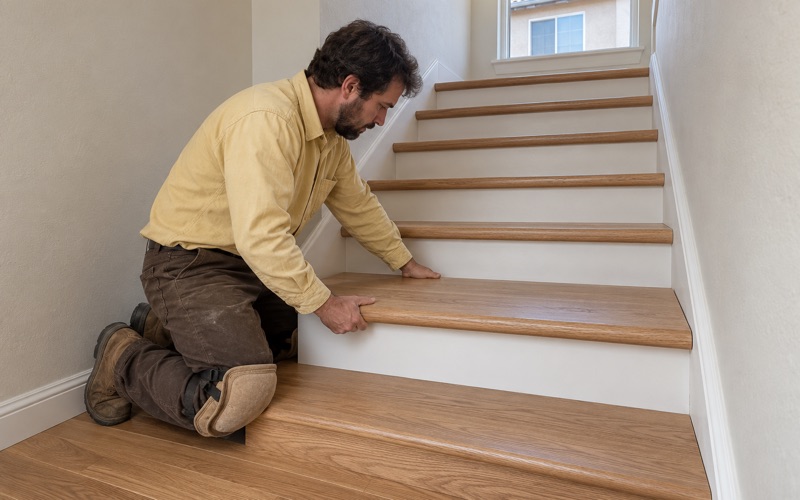
Hawthorne Wood Flooring has done wood-flooring in El Segundo for more than 20 years, sanding and refinishing oak, replacing damaged boards, and installing new hardwood and engineered floors in houses, duplexes and small apartment buildings. Every job starts with a written, itemized estimate, so the owner knows what each room, each stair and each repair will cost before a sander comes through the door.
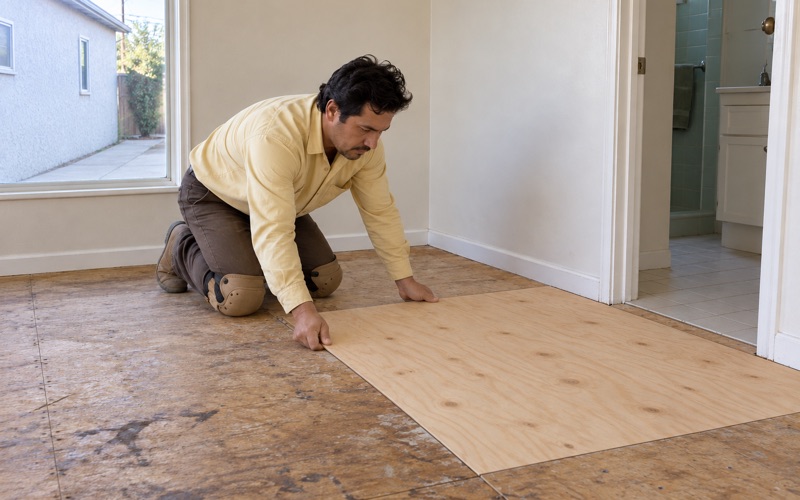
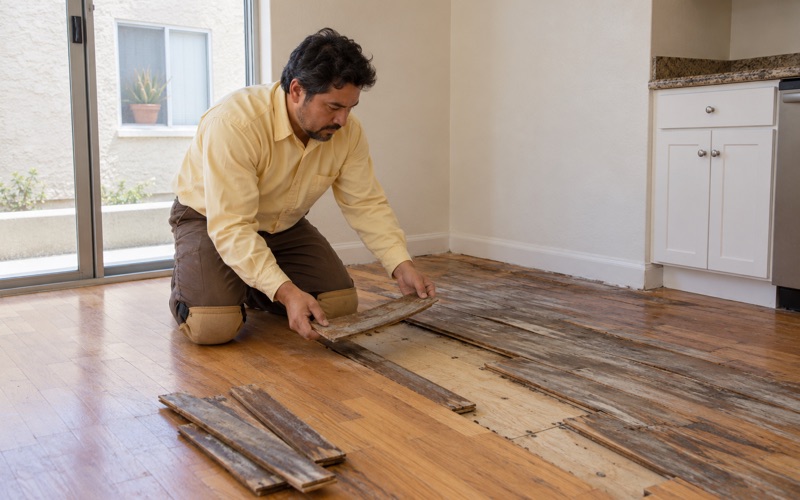
Before anything is priced, we check what is actually under the floor. Carpet pad, staples and tack strip come up and their holes get filled, the subfloor is opened and inspected for soft spots or swollen sheathing, and moisture is read in the wood and in any concrete, with every reading written down. A problem found at that stage costs far less than a callback.
Many of the calls we get from this city circle back to one question: will a wood floor make a loud house louder? This page takes that question seriously. It covers what the outside noise setting does and does not change about a floor choice, and why a quiet floor comes from decisions an owner makes inside the house rather than from any plan written for the outdoors.
Wood Floors in a City Beside LAX
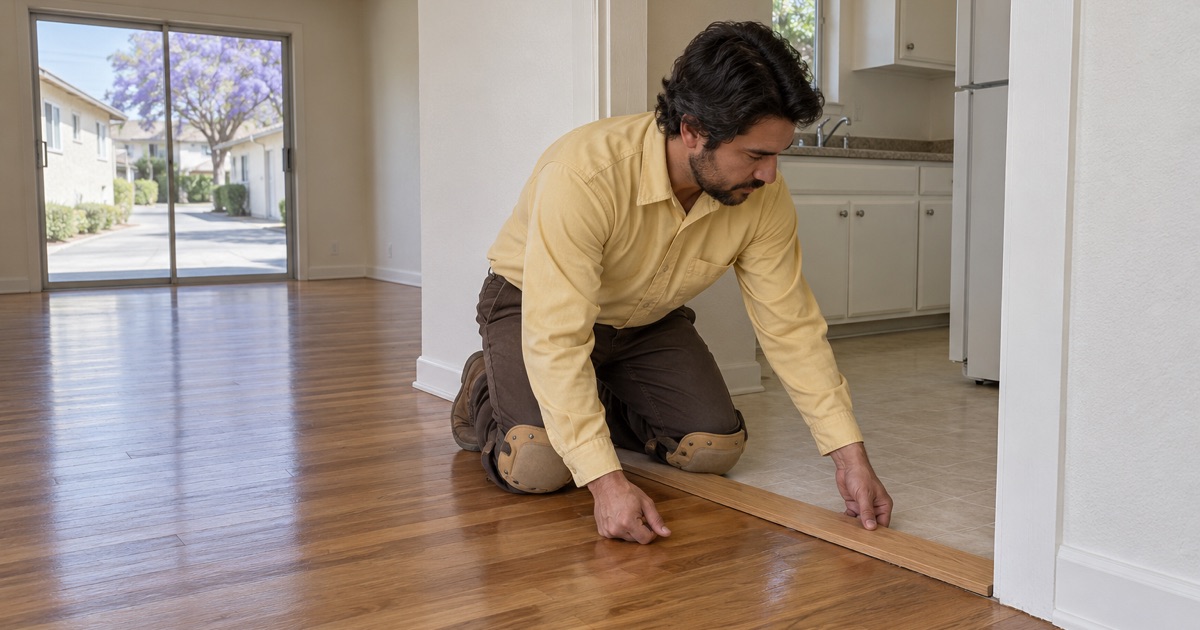
El Segundo’s northern boundary is Los Angeles International Airport, and that shapes how residents think about every hard surface in the house. It helps to start with what the city itself has put on record, because the record is narrower and more useful than the general impression most people carry around.
What the City’s Own Study Says About Noise
The initial study the city prepared for its 2021-2029 Housing Element, published in November 2021, states plainly that the noise environment in El Segundo is dominated by airport and vehicular traffic. It names the sources: Interstate 105 along the northern edge, Imperial Highway, Pacific Coast Highway, and the other primary and secondary arterials that carry traffic through town.
The same document places the airport adjacent to the city’s northern border, directly across Imperial Highway. It also notes that the Los Angeles County Airport Land Use Plan, revised December 1, 2004, includes provisions for noise insulation in areas next to the county’s public airports. None of that says anything about floors, and we think that silence is worth noticing.
A Finished City Means Existing Floors
The study describes every area of the city as essentially built out, with future development limited to infill and replacement of existing uses. For a homeowner, that means the floor question is rarely about choosing materials for a brand-new house. It is about the floor already in place, what is hidden under it, and whether it is worth saving.
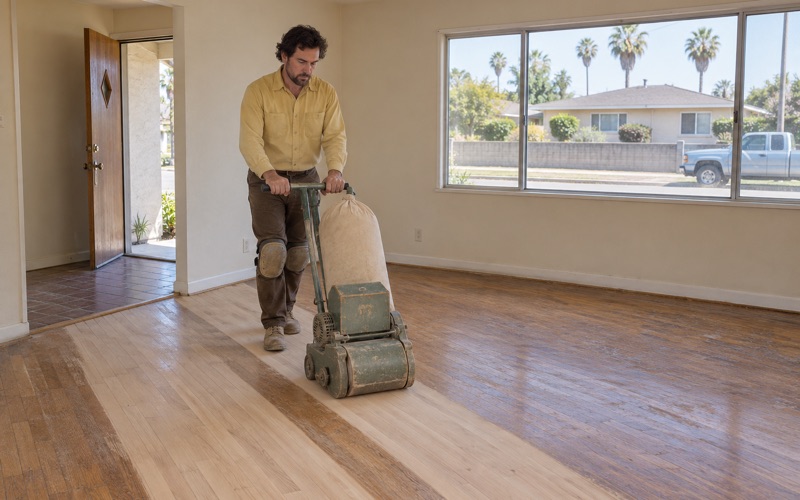
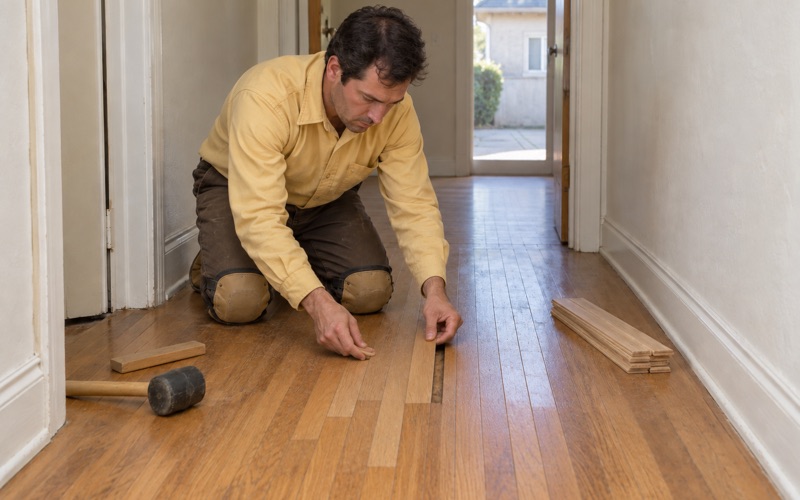
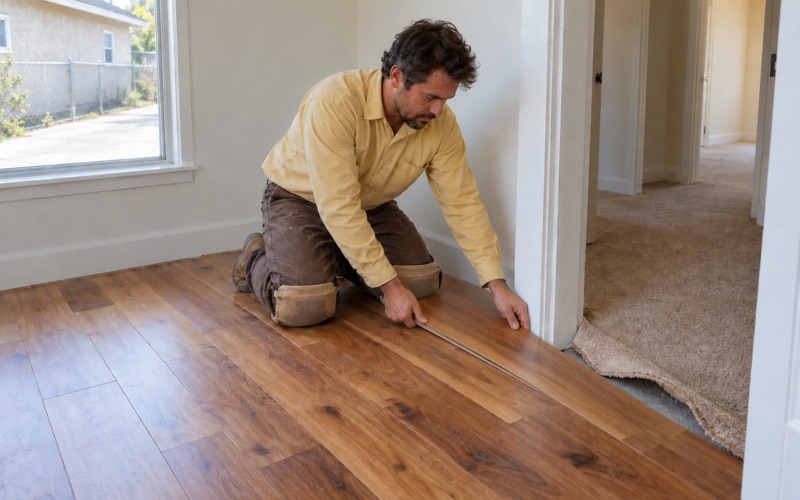
In practice most of our work here is refinishing, repair and replacement inside existing homes. We lift carpet to find hardwood, patch boards cut by earlier owners, and match floors that were extended room by room over the decades. A weave-in repair that blends with the existing boards, or a careful sand and refinish, is often the right answer in a city where almost nothing is new.
What the Sound Insulation Work Left Alone
Some El Segundo homes have been through the LAX Residential Sound Insulation Program, which the city first established in 1993 and which Los Angeles World Airports now runs with the FAA. Its work has centered on replacement windows and exterior doors, attic insulation and ventilation systems. Floors are not part of it, so a treated house still has whatever floor it had before.
That is worth knowing before a remodel. Owners sometimes ask whether new flooring would undo the program’s work, or whether the program covers a floor, and the program’s own description of its treatments names neither. It targets the openings and the attic. The floor decision, and the way that floor sounds when someone walks across it, stays entirely with the owner.
Looking for wood-flooring closer to Hermosa Beach? See Hermosa Beach Wood-Flooring.
Hard Floors and Sound Inside the House
Footfall Versus Aircraft
Two different kinds of sound get mixed together in these conversations. Aircraft and freeway noise comes from outside and reaches a room through windows, walls and the roof. Footfall, dropped objects, chair legs and a dog’s nails are made inside the house, and the floor surface has a great deal to do with how those sounds carry from room to room.
A wood floor will not make aircraft quieter, and it does not make them louder either. What changes with hard flooring is how the room itself behaves. Carpet absorbs some of the sound bouncing around a space, and bare wood reflects more of it, so a room that felt hushed with wall-to-wall carpet can feel livelier once the carpet comes out, even though nothing outside changed.
Rugs, Pads and Furniture
Most of that liveliness is easy to manage. Area rugs over a good rug pad, upholstered furniture, curtains and full bookshelves all soften a room with hard floors, and every one of them can be moved or changed later. We usually suggest living on a refinished floor for a few weeks before deciding how much rug coverage a room really needs.
The pad matters as much as the rug. Some rug pads use rubber compounds or adhesives that can mark a fresh finish, so the written cure schedule we leave says when rugs can go back down, not just when the floor can be walked on. Laying a rug on a finish that is still curing is one of the most common ways a brand-new floor gets blemished.
Underlayment on New Installs
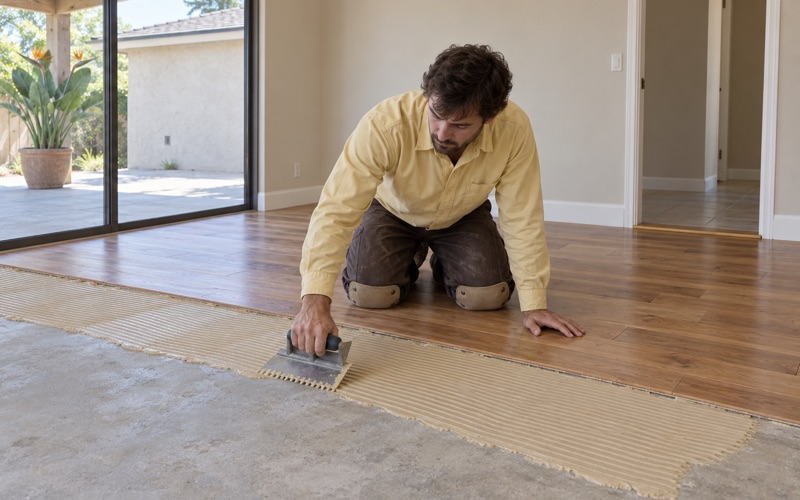
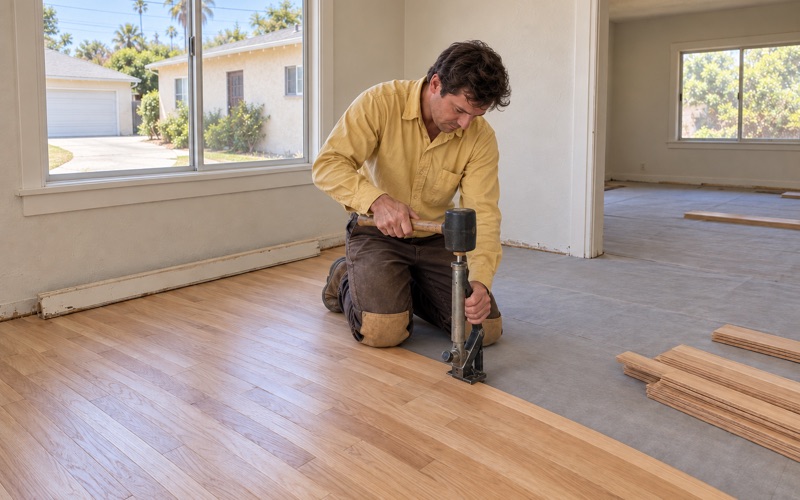
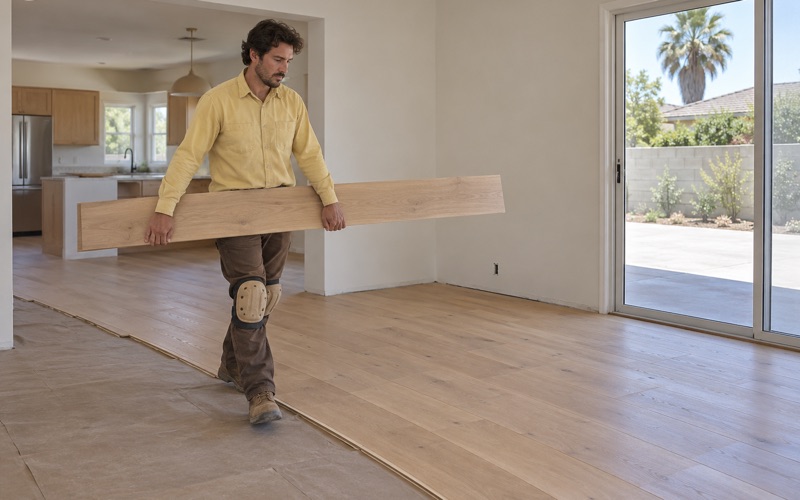
When a floor is being replaced rather than refinished, underlayment is where the real choices sit. A floating or glue-down engineered floor can go over an acoustic underlayment, and a nail-down solid floor has its own set of options. The choice affects how footsteps sound in the room itself and, on an upper floor, how they sound to anyone living below.
We pick underlayment for the specific floor and building rather than by habit, and we follow NWFA installation guidelines for acclimation, fastening and the expansion gap at the walls. We do not quote sound ratings or promise a number, because the result depends on the whole assembly and the building around it. What we can promise is an installation that stays flat and does not squeak.
Floors in Small Apartment Buildings
Five-to-Nine-Unit Buildings and the Neighbor Below
Renters occupy 57.5 percent of El Segundo’s occupied homes, and the most common building type for those renters is the five-to-nine-unit apartment building, which holds 1,438 of the city’s 4,275 rented households. That is a very different flooring market from a city of detached houses, and it puts the unit below at the center of many of our decisions.
In those buildings the complaint we hear most is not about the airport. It is the upstairs neighbor walking across a hard floor late at night. On every upper-floor install we choose underlayment with the household below in mind, and we recommend rugs and felt pads under furniture in the bedrooms and hallways where footsteps travel the most.
Turnovers and Move-Out Records
Owners of duplexes, fourplexes and small buildings usually call us between tenants. We plan the work to finish on the turnover date the owner gives us, with a finish chosen to hold up through the next tenancy, and stairs priced per tread and riser so a landlord can see exactly what a stairwell adds. A screen and recoat can sometimes carry a sound floor through one more lease.
Every estimate and invoice we write is itemized. Under Civil Code 1950.5, a landlord who deducts from a security deposit must give the tenant an itemized statement of deductions, and normal wear and tear cannot be charged. A line-by-line record from the flooring contractor, with photos of the damage, helps both sides see which repairs reflect ordinary use and which reflect something more.
Building Rules and Condo Associations
Some multi-unit buildings here are condominiums, where Civil Code 4760 and the association’s own documents govern what an owner may change inside a unit. Many associations set flooring rules about hard surfaces, underlayment and working hours. We read those rules before the work starts and coordinate with the manager, so dust, sanding noise and material deliveries do not surprise the neighbors.
Dust containment matters more when a hallway and a wall are shared. We run a dustless sanding system with the work area sealed off and finish with HEPA vacuum cleanup, and we keep the unit next door informed of the schedule. Sanding is loud work in any building, so the drum sander and edger run only during the hours the building allows.
Planning Floor Work in El Segundo
Houses Built From 1940 to 1969
The bulk of the city’s housing went up in three decades. Of 7,889 housing units, 54.1 percent were built between 1940 and 1969, and the 1960s were the single largest decade. When we lift carpet in a house from those years we often find hardwood underneath, and once the old pad and fasteners are cleared, it can usually be sanded back to bare wood.
Age brings its own checks. 73.4 percent of the housing units date from before 1980, which means many El Segundo homes predate the 1978 cutoff in the EPA Renovation, Repair and Painting rule, and we follow lead-safe work practices on those houses. Old 9x9 tile or black mastic under a floor is treated as a possible asbestos question before anything is sanded or scraped.
Moisture, Finish and Air Rules
El Segundo sits on Santa Monica Bay, inside the National Weather Service forecast zone named Los Angeles County Beaches. We measure moisture content in the existing floor and in any new material with a wood moisture meter, and on concrete we use a calcium chloride test or an ASTM F2170 in-situ relative humidity test, recording every reading before any material is ordered.
Finishes are chosen from products legal to apply in the South Coast air basin. South Coast AQMD Rule 1113 sets a 275 g/L VOC limit for wood coatings, and we work with waterborne polyurethane and compliant oil-modified products inside that limit. We help each owner weigh color, sheen level and durability, including how red oak and white oak take stain differently.
Scheduling Around a Household
Many households stay in the house while we work, which is why every job comes with a written cure schedule. It says when each room can be walked on in socks, when furniture can return and when bedrooms can be slept in again. We sequence the rooms so a family keeps a bathroom, a path to the kitchen and somewhere to sleep throughout the job.
If a floor has been damaged by water, including a leak from the unit upstairs, we trace the source before repairing anything and document it with photos and moisture readings an insurance adjuster can use. Call Hawthorne Wood Flooring for a written estimate on refinishing, repair or a new floor, and we will start by looking closely at what is under the one you have.
- 20+ Years With Wood Floors
- Written, Itemized Estimates
- Low-VOC South Coast Finishes