Hawthorne Wood Flooring has spent more than 20 years on wood flooring in Commerce and the surrounding part of Los Angeles County, sanding, repairing and installing floors in houses, duplexes and small multifamily buildings. We price from what we measure rather than from a guess, so every written estimate lists the subfloor findings, the moisture readings and each line of labor and material.
Most of the floors we see here fall into two groups. One is the older house, where a floor may have spent decades under carpet, sheet vinyl or tile and has to be uncovered carefully before anyone can say what it will take. The other is the newer attached home, where the questions shift to underlayment, association rules and the neighbor on the other side of the wall.
Either way, the work runs in the same order. We open and check the subfloor, take moisture readings in the wood and in any concrete, confirm which finish products are legal to apply in this air basin, and hand over a cure schedule so the household knows when each room can be walked on, furnished and slept in again.
From Park and Landfill to Housing in Commerce
What the Public Record Shows
The largest planned housing change in Commerce sits at Gage Avenue and Zindell Avenue in ZIP 90040. The Modelo Project covers a 17.32-acre site that takes in Veterans Memorial Park and an adjacent vacant parcel. The state CEQAnet record for the project describes that land as previously used for landfill operations, which is why remediation is part of the plan.
The 2019 Notice of Preparation for the project’s environmental review proposed 825 residential units and about 165,000 square feet of entertainment retail, along with reconstruction of Veterans Memorial Park. A 2022 release from the developer, Comstock Realty Partners, describes the City Council approving an 850-unit mixed-use version with a public-private park, a community center and a museum.
Where the Plan Stands in 2026
Urbanize LA reported on February 20, 2026 that the project had secured a $50 million loan, and that the money will be used for remediation of the park site. The same report counts 740 apartments, 45 condominiums and 65 townhomes in the current plan, and says Comstock is set to begin construction of the new townhomes first.
We have no role in that project and no inside view of its schedule, its finishes or its flooring. What the record does show is that the townhomes are the part of the plan headed into construction, and whoever eventually buys or rents one will face the same floor decisions every attached home in this county brings, plus the question of what the builder chose.
Two Housing Eras on One Corner
The Modelo site stands out because of what surrounds it. Census estimates show 52.2 percent of Commerce housing units were built between 1940 and 1959, and they count no units built in 2010 or later. New construction on this scale would sit beside a housing stock that has barely changed in two generations, a few blocks from houses built in the 1940s and 1950s.
That mix shapes what we bring to a job near Veterans Park. A 1950s house down the street from a new townhome needs a different set of first questions, different tests and different products, even when both owners want the same look in the end. The next two sections take them one at a time, starting with the new construction.
Looking for wood-flooring closer to Signal Hill? See Signal Hill Wood-Flooring.
Floors in a New Townhome or Condominium
Reading the Association Rules First
Townhomes and condominiums sold within a common interest development usually come with an association and written rules. California Civil Code 4760 addresses certain alterations an owner may make inside a separate interest, and associations often set their own conditions for flooring changes, work hours and notice. We read those documents before any material is chosen, not after a complaint arrives.
Some associations ask for a sound-control specification, a written description of the work or board approval before hard flooring replaces carpet. We gather whatever the rules ask for and attach it to the estimate, so the owner is not stuck halfway through a project waiting on paperwork that could have been handled at the start.
The Neighbor Below and Beside
Stacked condominiums and attached townhomes share floors and walls. On an upstairs install we choose the acoustic underlayment with the neighbor below in mind, matched to the flooring product and to what the building’s rules call for. We do not quote sound-rating figures from memory; the association documents and the product’s own published data decide what qualifies.
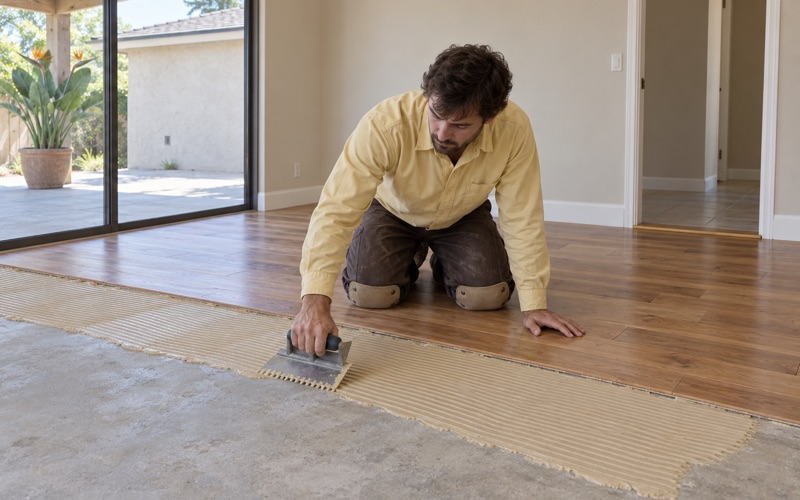
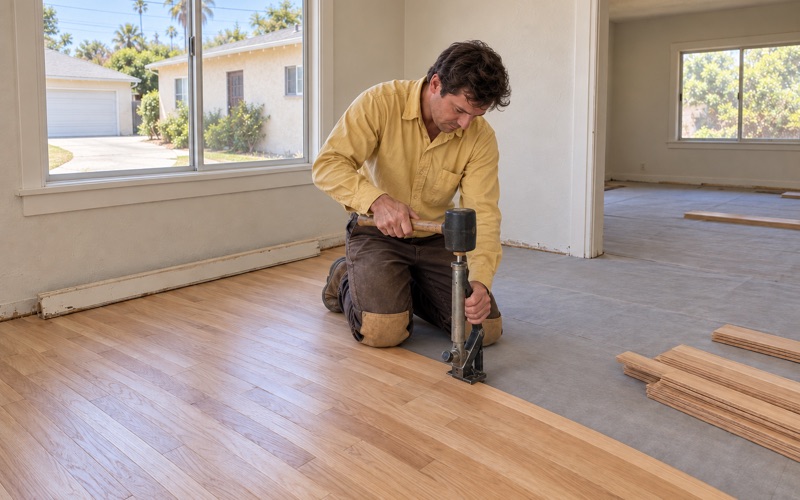
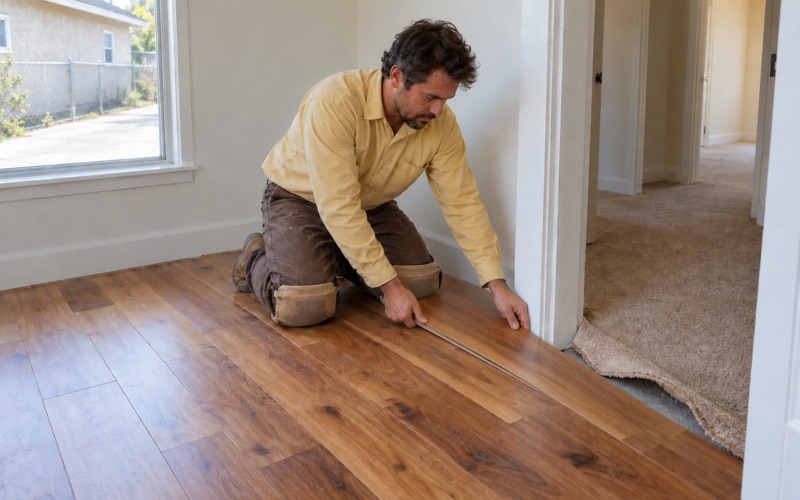
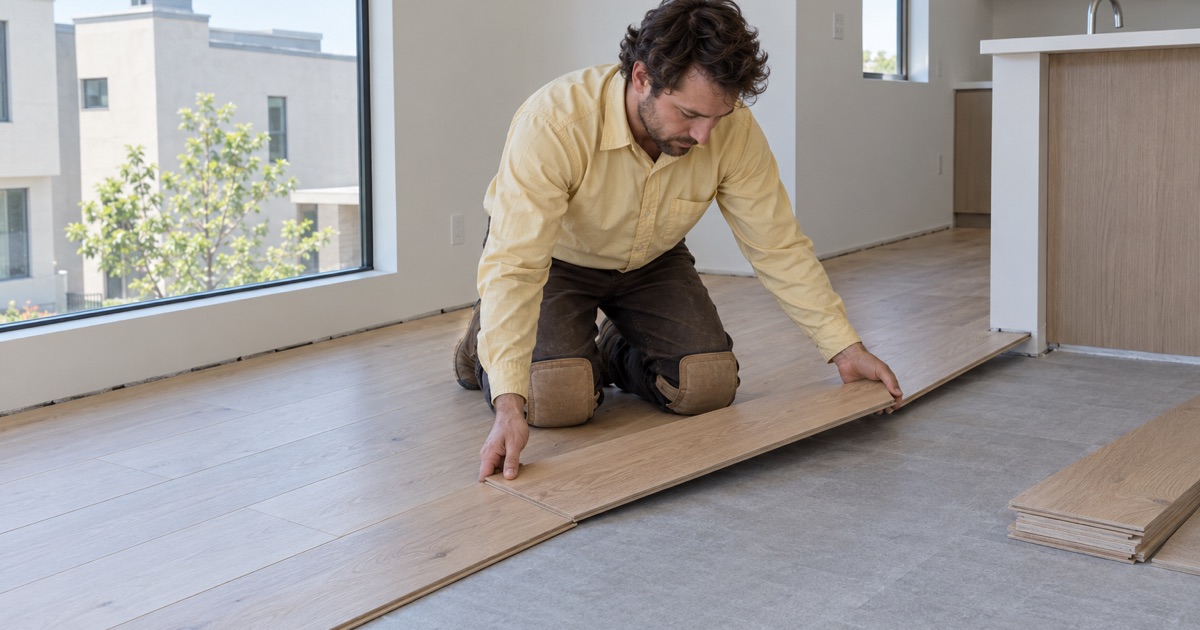
Installation method matters as well. A floating installation over acoustic underlayment, a glue-down installation and a nail-down installation over a plywood subfloor each behave differently for sound and for seasonal movement. We leave the expansion gap at walls, finish it with shoe molding, set a T-molding or reducer strip where rooms meet, and explain the tradeoffs before the owner commits.
New Construction Still Needs Testing
New does not mean dry. Concrete keeps giving off moisture for a long time as it cures, and framing lumber can arrive carrying its own moisture content. Before ordering flooring for a newer unit, we take readings with a wood moisture meter and, where concrete sits under the floor, run an ASTM F2170 in-situ relative humidity test or a calcium chloride moisture test.
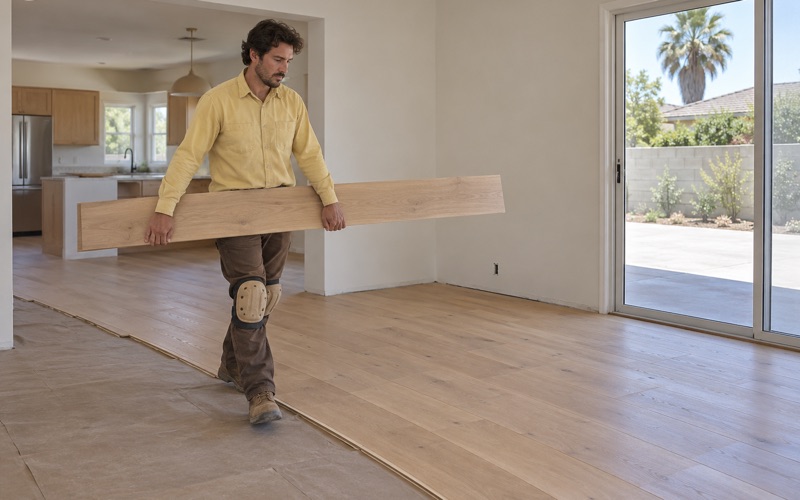
Those readings are written down and kept with the estimate. Engineered flooring with a stable engineered core construction and a sensible wear layer thickness often suits attached homes, but it still needs acclimation to the rooms it will live in. We follow NWFA installation guidelines on timing and let the numbers, not the calendar, decide when the boards go down.
The Older Houses Around Veterans Park
What Decades Under Carpet Leave Behind
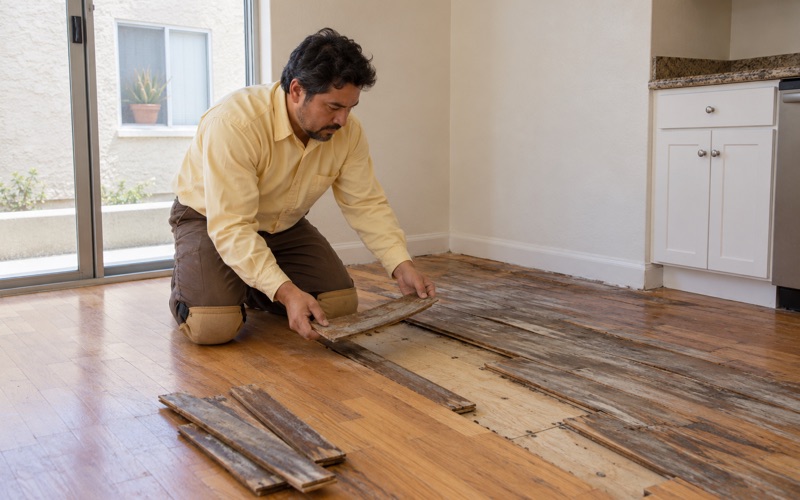
With more than half the city’s housing built in the 1940s and 1950s, many floors near Veterans Park have spent years under wall-to-wall carpet. We never assume what is underneath until it is uncovered. When wood turns up, we lift the pad, scrape any carpet pad adhesive, pull the staples and the carpet tack strip, then fill every hole before sanding starts.
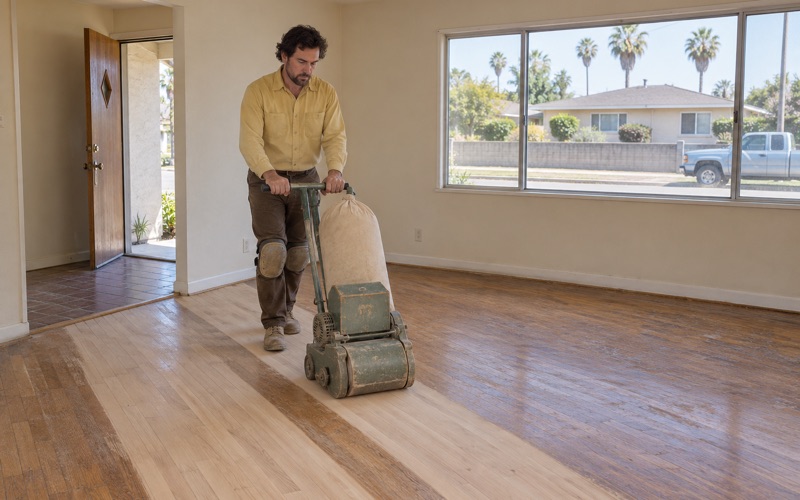
That preparation is what lets a floor refinish clean. We sand with a drum sander and edger through a grit sequence suited to the species, finish the surface with an orbital sander, and use a dustless sanding system when the family is still living in the house. Pet urine stains, board gaps, squeaks and cupping are noted on the estimate before anyone agrees to a price.
Lead and Asbestos in Pre-1978 Houses
Census estimates put 72.9 percent of Commerce housing units before 1980, and work on houses built before 1978 falls under the EPA Renovation, Repair and Painting rule when it disturbs painted surfaces. Sanding along painted baseboards, stair risers and door casings can do exactly that. We follow lead-safe work practices on these houses, with containment and HEPA vacuum cleanup.
Older kitchens and baths sometimes hide 9x9 asbestos floor tile or black mastic beneath a later floor. We treat either as a possible asbestos question before anything is sanded or scraped, and where the material calls for it, an asbestos survey comes first. South Coast Air Quality Management District Rule 1403 governs asbestos work in this air basin, so that step is never skipped.
The Subfloor and What Sits Under It
A house from the late 1940s has had many decades for plumbing leaks, termites and settling to show up in the framing. We open and check the subfloor before pricing any finish floor, looking for soft spots, water-swollen sheathing, loose floor joists and sloping floors. Drywood termite kick-out holes and termite frass are noted and flagged for the owner before new wood goes down.
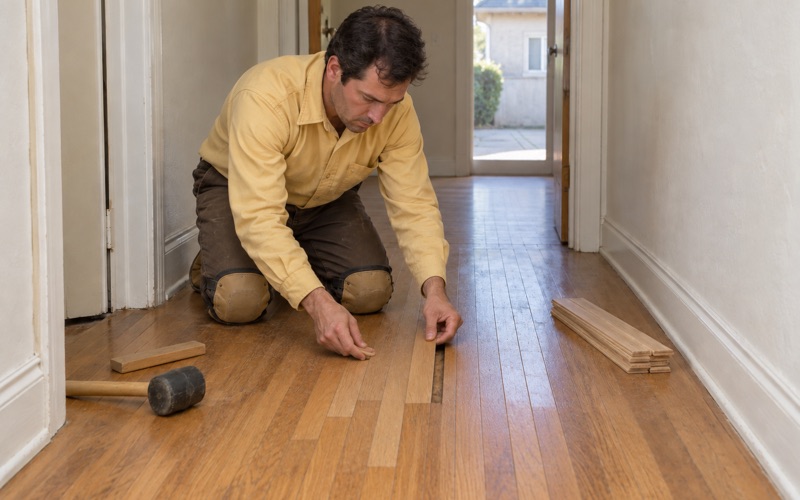
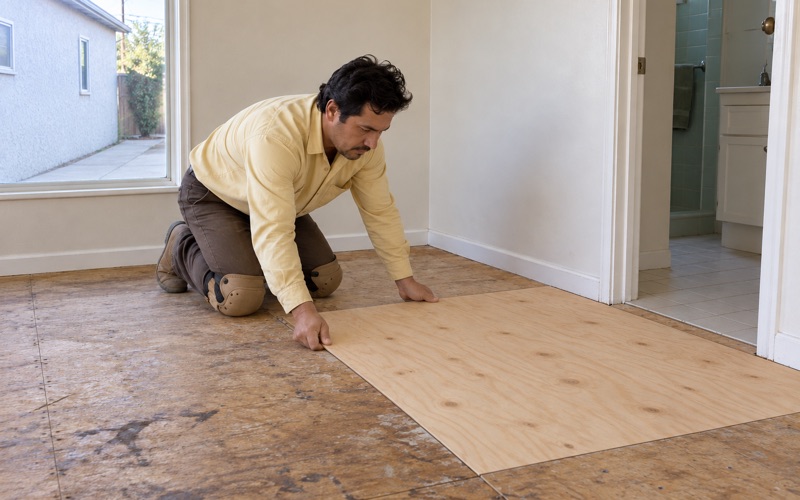
Where damage shows, we repair it rather than cover it. A board replacement or weave-in repair can blend a damaged patch into a sound floor, and a section of plywood subfloor can be replaced where the sheathing has failed. If water caused the damage, we trace it to its source and document it with photos and moisture readings an insurance adjuster can use.
Planning Floor Work in Commerce
Finishes Legal in the South Coast Air Basin
Commerce sits inside the South Coast Air Quality Management District, where Rule 1113 caps wood coatings at 275 g/L of volatile organic compounds. We choose finishes from products legal to apply here, whether a waterborne polyurethane, an oil-modified polyurethane that meets the limit, or a hardwax oil finish. Sheen level and color are chosen together, using a sample on the floor itself.
Red oak and white oak react differently to finish and stain. An oil-modified coat can push red oak toward the orange oak color change many owners want to avoid, and some species take stain unevenly and turn blotchy. We lay test patches in a closet or a corner, so the owner sees the real result before the whole room is coated.
Permits, Rentals and Written Records
The City of Commerce Building and Safety Division, part of Economic Development and Planning, reviews construction plans, performs inspections and issues building permits. Plans submitted from January 1, 2026 are checked against the 2025 California codes. Whether a particular floor project needs the division’s involvement is a question we put to it directly for the scope in hand, rather than answering from habit.
Rentals make up a large share of Commerce housing; census estimates count 1,488 renter-occupied units out of 3,307. For a landlord between tenants, we work to the turnover date the owner sets and supply written, itemized estimates and invoices that support the itemized statement of deductions California Civil Code 1950.5 calls for at move-out.
Stairs, Transitions and the Cure Schedule
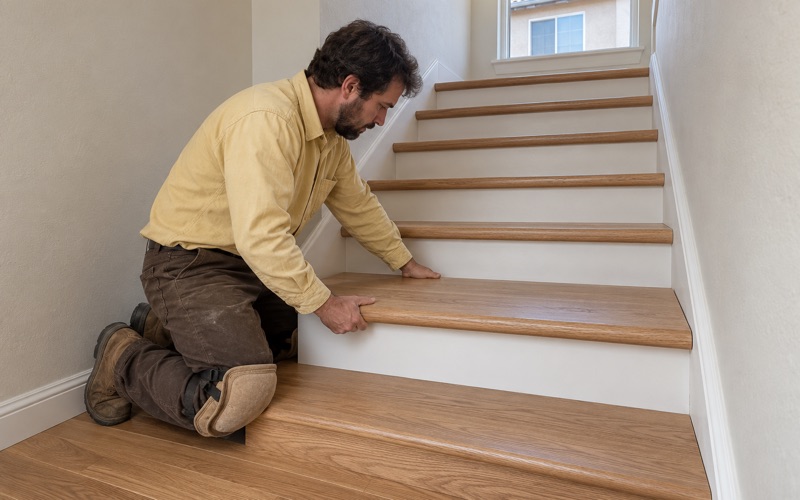
Stairs are priced per stair tread and stair riser, with the stair nosing detailed separately, rather than folded into a square-foot number. Transitions where wood meets tile or carpet are listed as their own line items, so an owner can compare our written estimate against any other bid line by line and see exactly where the money goes.
Before work starts, we set up dust containment and hand over a written cure schedule. It says when each room can take foot traffic, when furniture can come back and when the room is ready for sleeping. For a family staying put in an older house near Veterans Park, or an owner planning ahead for a new townhome, that schedule is what keeps the job manageable.
- 20+ Years With Wood Floors
- Written, Itemized Estimates
- Low-VOC South Coast Finishes