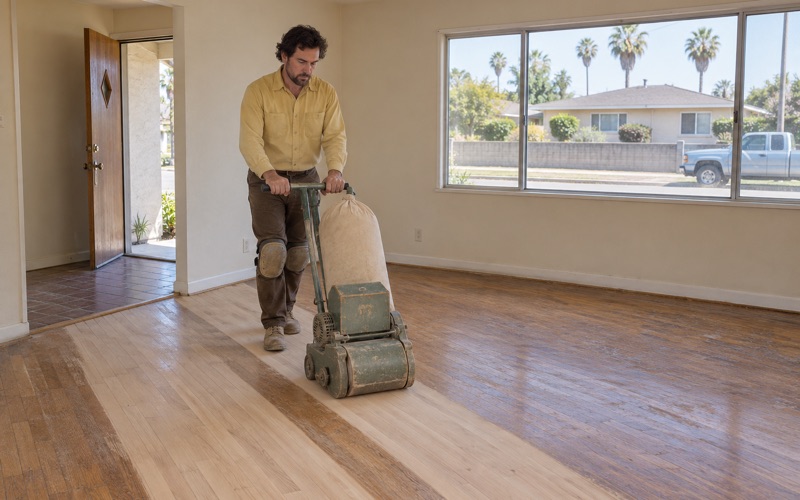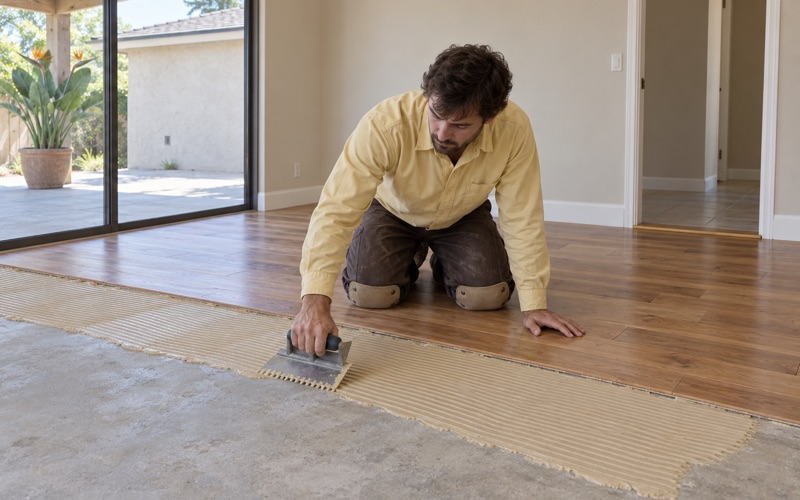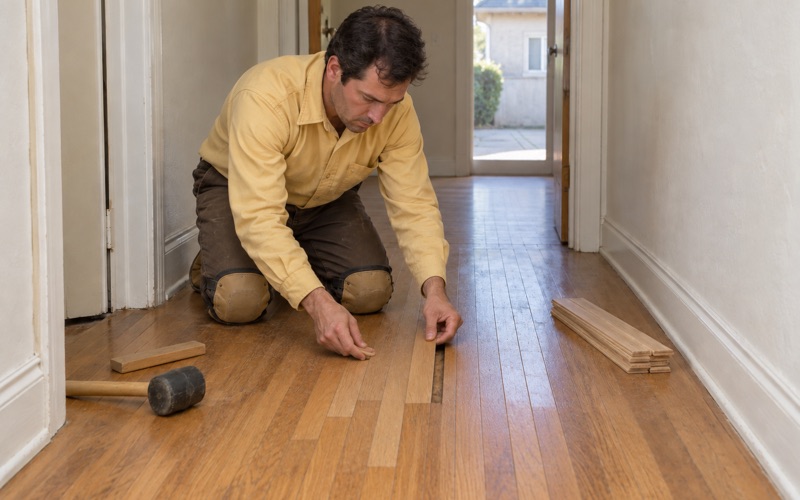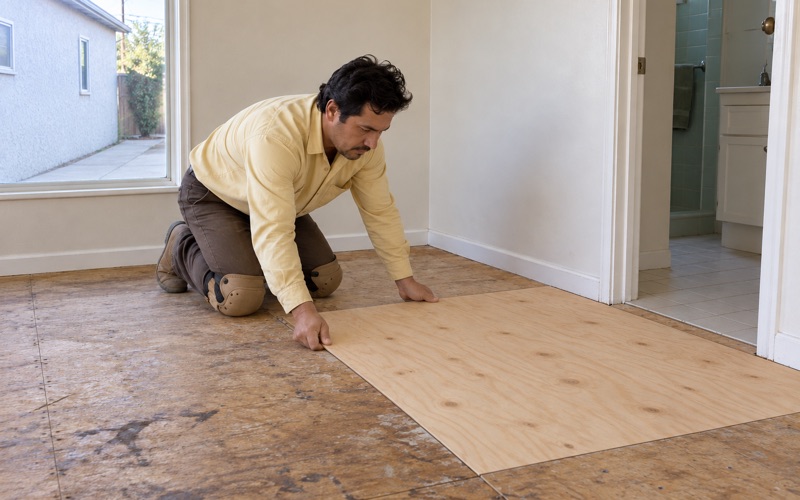
Hawthorne Wood Flooring has spent more than 20 years on wood-flooring in Artesia and across this part of Los Angeles County, sanding, repairing and installing floors in houses, duplexes and the newer multi-story homes going up along transit corridors. We start with what sits under the finish floor, because the subfloor decides whether a new floor lasts or comes back as a callback.
Before any board is priced, we open the floor where we can and check the sheathing and joists for soft spots, swelling from old leaks and loose fastening. We also take moisture readings in the wood and in any concrete underneath, write them down, and only then order material. A floor bought before those numbers exist is a guess.
Owners, landlords and tenants hire us for different reasons, so this page is organized around the homes people actually live in here: the older houses at the edges of the downtown, the rentals that turn over between tenants, and the townhomes and upper-floor units a new city plan now allows. Each section explains what changes about the work.
Artesia’s Downtown Plan and the Coming Rail Line
What the Council Adopted
In 2025 the City of Artesia finished a long planning effort for its downtown. The City Council approved the Final Environmental Impact Report on July 14, 2025, and adopted the ordinance putting the Artesia Downtown Specific Plan in place on August 11, 2025, along with amendments to the General Plan and Zoning Code. The city describes the goal as a walkable, livable downtown.
The reason for the timing is Metro’s Southeast Gateway Line. The city’s environmental notice says the light rail extension is anticipated to connect to Pioneer Boulevard in 2035. That is an anticipated date in a planning document, not a promise, and we plan floor work around the homes that exist today rather than around a station that is still years out.
Six Districts Around Pioneer Boulevard
The plan divides the downtown into six districts, each with its own height and density. Downtown South, the district below the future station, covers 23.1 acres and allows four- to six-story mixed use at 75 units per acre, with ground-floor retail, a hotel, townhomes and neighborhood parks among the listed uses. It is where the largest change is aimed.
Downtown North allows mixed use at 65 units per acre, with two- and three-story townhomes on part of it. The 188th Street/Corby Avenue district, 4.6 acres now holding homes and light industrial uses, allows duplexes, triplexes and townhomes at 65 units per acre. The plan also keeps the Le Belle Chateau Estates Mobile Home Park at 11 units per acre.
Where Change Is and Isn’t Expected
Not every district is meant to transform. In the Pioneer Boulevard district itself, with its narrow lots and continuous one-story storefronts, the city’s notice says significant new development is not expected, though three-story buildings are allowed. The Downtown Neighborhood district, covering 9.4 acres along Corby and Arline Avenues, keeps its residential character at 40 units per acre.
The plan identifies 53 Redevelopment Opportunity Sites, parcels that could support future redevelopment, and it does not itself propose specific buildings. A news report puts the plan’s capacity at up to 1,981 housing units by 2045 and describes projects of 83 units at 17610 Pioneer Boulevard and 168 units at 11746 South Street as underway. Those are reported plans, not finished homes.
Looking for wood-flooring closer to Santa Fe Springs? See Wood-Flooring Services in Santa Fe Springs.
Homes Inside the Plan Area
The Downtown Neighborhood Along Corby and Arline
Much of the housing inside and beside the plan area is not new at all. The houses along Corby and Arline Avenues sit in the district the plan leaves residential, so the floors in them are the ones people will keep living on while taller buildings rise a few blocks away. That work is ordinary refinishing, repair and replacement, done carefully.
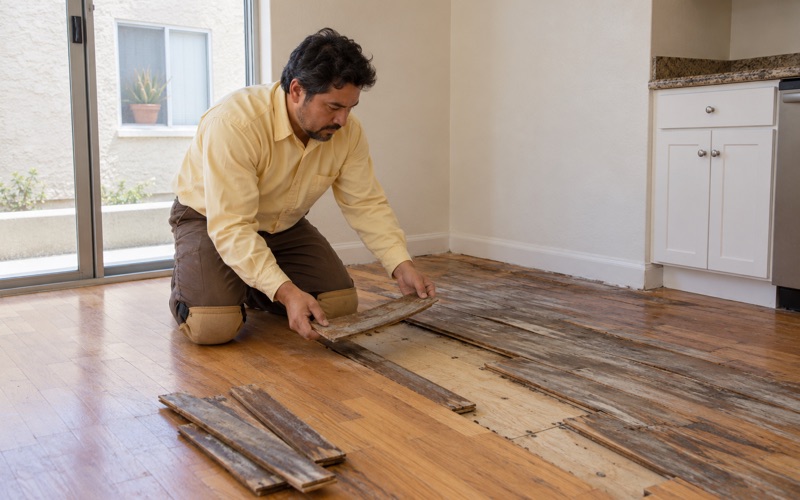
On these jobs we often lift carpet first. We pull the pad, the flooring staples and the carpet tack strip, scrape off any carpet pad adhesive, and fill the holes. Whether the surface underneath is solid wood worth sanding or a subfloor waiting for a new floor is decided once it is clean, not guessed at from a lifted corner.
Older Houses and Lead-Safe Sanding
Census figures put 76.2 percent of Artesia’s housing units as built before 1980, and much of that stock predates 1978, the cutoff for lead paint rules. Baseboards, door casings and stair parts in pre-1978 housing can carry old paint, and a drum sander or edger working next to them can raise dust nobody wants in a home.
We follow lead-safe work practices under the EPA Renovation, Repair and Painting rule on those houses: containment at the doorways, a dustless sanding system with HEPA vacuum collection, and cleanup before anyone moves back in. Old 9x9 floor tile or black mastic under a floor is treated as a possible asbestos question, and nothing is sanded or scraped until it is answered.
Rentals Near the Corridor
Artesia is close to evenly split between owners and renters, with 2,278 of its 4,513 occupied units renter-occupied. Many of those rentals are in duplexes, fourplexes and small apartment buildings, and a floor in a rental has a different job. It has to survive a tenancy, look right for the next showing and be done by the date the owner sets.
For landlords we finish floors for wear between tenants and schedule around the turnover date. Our estimates and invoices are written and itemized, which matters at move-out: under Civil Code 1950.5 a security deposit deduction needs an itemized statement of deductions, and normal wear and tear is not the tenant’s cost. A clear invoice helps both sides read the same numbers.
Floors in New Townhomes and Upper-Floor Units
Upstairs Units and the Neighbor Below
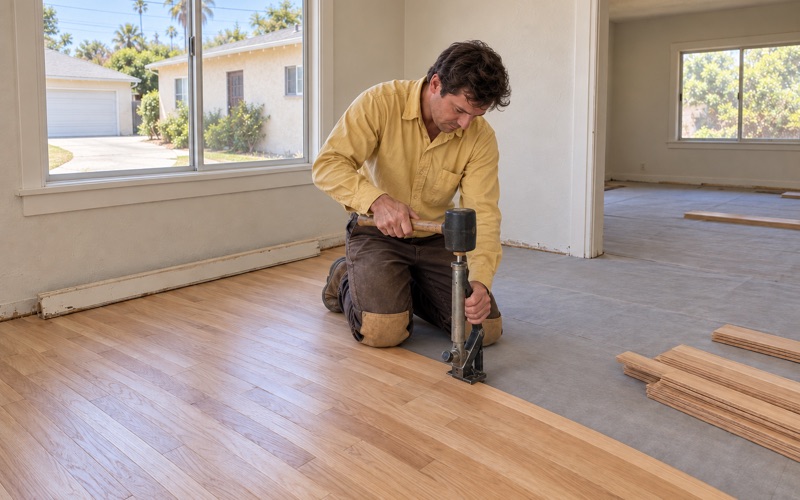
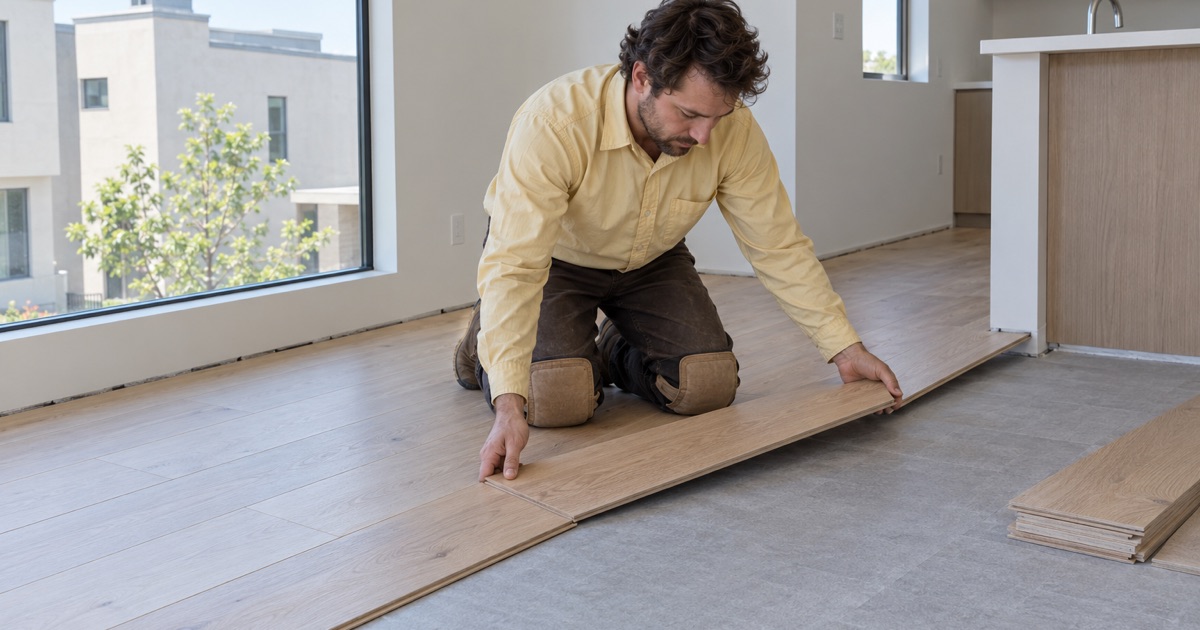
The plan’s townhomes, duplexes and mixed-use buildings mean more floors stacked over other people’s ceilings. Wood over a living space is a noise question as much as a looks question, so on upstairs and condo installs we choose acoustic underlayment with the neighbor below in mind and match the installation method, glue-down or floating, to the subfloor and the building.
Many multi-unit buildings carry their own rules about flooring in upper units, and in a condominium, Civil Code 4760 governs alterations to a separate interest. We read the association’s or building’s written rules before starting. We do not quote sound figures here, because the requirement belongs to the building and its documents, not to a general promise from us.
Moisture Before Material
Some lower floors in newer mixed-use and townhome construction are concrete, and wood placed over concrete fails when the moisture reading was skipped. Where there is a concrete subfloor we test it, using the ASTM F2170 in-situ relative humidity test or a calcium chloride moisture test as the job calls for, and we record the results before ordering a single carton.
The wood gets measured too. A wood moisture meter tells us the moisture content of the boards and the subfloor, and acclimation continues until the two sit within the range the NWFA installation guidelines and the manufacturer set. Skipping that step is how cupping, crowning and board gaps show up a season after an otherwise tidy install.
Finishes for the South Coast Air Basin
Artesia is under the South Coast Air Quality Management District, and SCAQMD Rule 1113 limits wood coatings to 275 g/L of VOC. Every finish we apply is chosen from products legal in the basin. For most households that points toward a waterborne polyurethane, with a hardwax oil finish as an option when someone wants a lower sheen and easy spot repairs later.
New units add a second product question. Engineered flooring and underlayments with composite cores should be CARB Phase 2 compliant and meet the TSCA Title VI formaldehyde limits, so we check the label before anything goes in. For a new owner, a floor with a thicker wear layer leaves room to sand and refinish later instead of replacing the whole floor.
Planning Floor Work in Downtown Artesia
Timing Around a Long Build-Out
The plan looks many years ahead, and nothing about it requires a homeowner to wait. If a floor near Pioneer Boulevard is cupping, peeling or worn through today, the right time to fix it is now. If a larger remodel is planned, we can phase the flooring so the rooms a family uses most are finished first.
Construction nearby brings dust and vibration, but it rarely changes what a finished interior floor needs. What it can change is access: parking, deliveries and working hours on a busy block. We ask about those when scheduling, so sanders, material and a finishing crew arrive when the street and the building allow them.
Stairs, Repairs and Clear Pricing
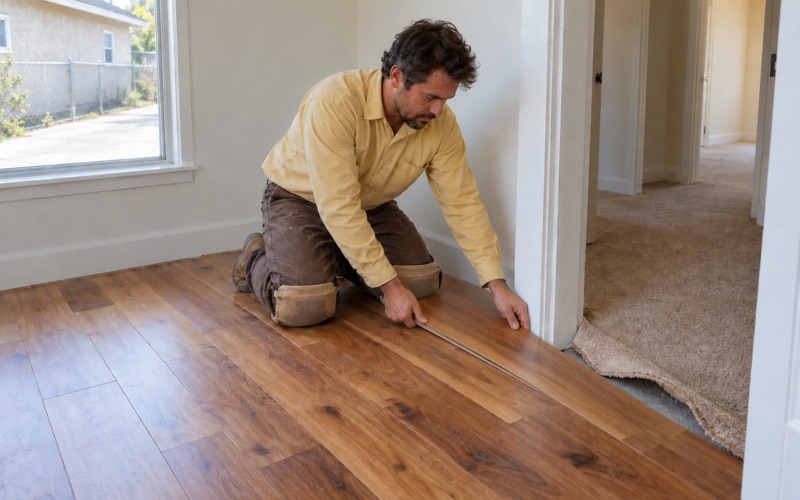
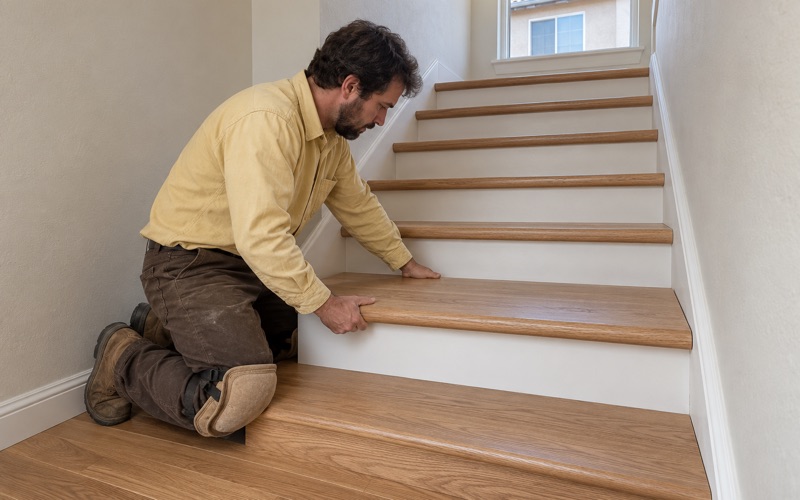
Townhomes put stairs back into the conversation. We price stairs per stair tread and stair riser, with stair nosing and any reducer strip or T-molding listed separately, rather than burying them inside a square-foot figure. Small damage gets the same treatment: a weave-in repair or board replacement is quoted as its own line when that is all a room needs.
When a floor was ruined by water, including a leak from the unit upstairs, we trace the source before we replace anything and document the damage with photos and moisture readings an insurance adjuster can use. Smoke- or ash-exposed floors are cleaned and inspected before a new coat goes on, because fresh finish can seal soot into the grain.
Living Through the Job
Most of our clients stay home during the work. We set up dust containment, run collection on the sanders, and hand over a written cure schedule showing when each room can take foot traffic, when furniture can return and when a bedroom is ready to sleep in again. Waterborne finishes usually shorten that wait compared with oil-modified polyurethane.
If you own, rent or manage a home near the downtown and want a floor looked at, start with a visit. We check the subfloor, take readings, write up an itemized estimate and explain what we found. Whether the job is a screen and recoat or a full replacement, you will know the scope before any work begins.
- 20+ Years With Wood Floors
- Written, Itemized Estimates
- Low-VOC South Coast Finishes